Tag Archives: husband with memory loss

Ralph’s Good Memory Mood Lets the Good Times Roll


IMG_0154.JPG                                           (rainbow at our farm one recent evening)

Anger, resentment, frustration, impatience, worry, guilt—wow, I have really sounded like an unhappy person lately.

But spring has arrived, the sky is clear, and so far the mosquitoes are staying away.

Also, Ralph is in a good mood.

Which means that he is in a good memory mood. Which means he is relatively relaxed. And when he’s relaxed, his memory lapses don’t escalate. And I have more patience. So the cycle turns positive instead of negative.

It helps that our son is visiting for two weeks—an unheard of treat although since Ralph’s diagnosis he has really stepped up to the plate in terms of making time to spend with Ralph. Last weekend we threw a dinner party with my son’s friends and ours in attendance. Guess who was the life of the party? (“Ralph is so smart and funny,” one of our newer friends said to me the next day.) And I had a good time too.

In a couple of days our sixteen-year-old grandson is arriving for one of his understandably infrequent visits from his home with our former daughter-in-law in Namibia. S’s father, Ralph’s son from his first marriage who now lives in California but talks to Ralph on the phone at least four days a week now, wants S. to have some quality time with his grandfather while he still can.

Everybody will be here to attend the art show Ralph’s art class is having on Saturday. Ralph is the only male in the class. I suspect he’ll be feeling the love on Saturday.

Then on Sunday, we’re having a picnic for S’s extended family—Ralph’s first wife with her husband, kids and grandkids as well as S’s mother’s sister’s growing family. It sounds complicated, lots of blended families.

But the thing is, there will be lots of kids here. Kids love Ralph and he’s great with them. He’ll have a ball.

As for me, it is interesting, because my reactions have become oddly less complicated. If anything, I am surprised how little I mind doing all the organizing legwork.

In the early days of our relationship, I used to resent Ralph’s charisma, his skill and desire to socialize. I wanted him to pay me the attention he paid everyone else, and I often felt like an uncomfortable afterthought among his friends.

Now that our life together has reduced down to a narrow, often lonely routine,  I get more attention from Ralph than I need or want (although I do sometimes get jealous of the dogs I suppose). So it is a gift to see Ralph caught up in the whirl of social interaction with others for a change, to see him following and actively participating in conversations.

While the others laugh at his jokes, I can relax and enjoy Ralph himself in ways I forgot, if I ever recognized, were possible.

Let the good times roll.

Memory–Taking One Turn At A Time


directions.jpg

It’s a good thing I got my anger out in the last blog because the day after it posted Ralph and I spent an intensive 36 hours together on an all-work-no-play trip to Florida, and I needed all the patience I could find.

I had gone to Florida alone the week before, but Ralph came this weekend to help unload a truck’s worth of furnishings and supplies at the townhouse we’ve been renting out to vacationers since we bought it at an inflated price months before the 2008 Florida real estate crash.

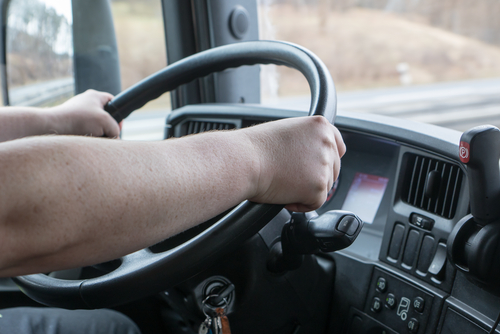
Ralph wanted to do the driving initially, and I let him, although I “casually” reminded him repeatedly where to turn, where to exit, what speed to go. Of course, he doesn’t remember missing any turns on our previous car trip and I didn’t remind him. However, I did stupidly mention, as if in passing, that his sense of direction was not what it used to be. He took umbrage, declaring that he’d never been good with directions—a truth but one that doesn’t exactly address subtle but important shifts: his diminishment of confidence as a driver, his loss of what used to be ingrained routes and routines, like where the best gas station bathrooms and lunch-stops are, and more distressingly his inability to remember the basics. Why are we going there again? How long are we staying again? Isn’t there a town we usually go through?

I took over driving halfway down.Being behind the wheel was definitely more relaxing to me, and Ralph took a nap. We both arrived at the townhouse ready to work.

“This is a lot of schlepping,” he kept repeating with a certain delight—Christian Southerner with a Jewish wife, Ralph loves his Yiddish phrases—as we hauled boxes up and down three flights of stairs for hours at a time. “Why are we doing this again?”

Each time he asked, I explained that our neighbor’s pipes burst last November flooding our townhouse; that insurance covered some but not all the repairs; that we were putting our place on the market since it was newly renovated and looking its best.

Basically I kept repeating the same long dissertation about the decisions we, i.e. I, had already made. But the longer and more complete my explanation, the more anxious Ralph became and the more convoluted his questions. What again, how again, why again? That word again, so friendly and jocular on his lips, so painful in my ears.

It should have been obvious but not until we were driving away from the townhouse, did I have my embarrassingly belated epiphany: I was explaining way too much. Ralph, who used to go into the longest, most complex analysis of any plan he was making, whether to buy a new car or plant a garden or go out to dinner, cannot handle big picture plans any more.

I heard myself yammering on about where did he want to have dinner and whether he wanted it before or after we bought porch chairs, when I suddenly realized the obvious: Loss of the past is not the worst problem caused by cognitive impairment. Loss of contemplating the future is far more disruptive. Ralph becomes anxious because he cannot hang onto the amount of when-where-how-why information I keep throwing at him.

So I have stopped (well, until I backslide). Ralph doesn’t need to know all the details about what we are doing two hours from now, let alone next week. He only needs to know when I see a turn coming up so he can take it. Then, once we are around the bend, we can start looking for the next road side attraction.

Mea Culpa–Sometimes This Caregiving Spouse Gets Angry (And That’s OK)

ANGRY WOMAN.jpg

Ok, so the truth is that I have been walking around all week furious at Ralph. Is that allowed, to be angry with someone with cognitive impairment? I have a voice in my head that I’ll call White Rabbit but that I also imagine (perhaps unfairly, but if I’m going for honesty here…) represents Alzheimer’s activists who would tell me, “No you don’t have that right. You can’t expect him to be a practical helpmate. You have to support him, not the other way around. You are a selfish bitch.” (I don’t really imagine the activist saying that last bit, but White Rabbit definitely.)

Well, my answer, this morning anyway, is so what? And I think it is important to accept my real feelings. As I try to define my role in Ralph’s life going forward, it doesn’t help to sweep the uncomfortable, unpretty emotional bits under the carpet. And the fact is that some of the ways he infuriates me now are no different from the ways he infuriated me before he was diagnosed.

So why am I angry this week? The details as I try to put them in typing sound almost silly: We have a rental townhouse in Florida that was recently flooded out after the neighboring townhouse’s pipes burst. I have had to take all the responsibility for dealing with insurance and repairs. I have been doing a lot of driving 5½ hours each way for 24 hour visits. This weekend is the final push—taking all the supplies and furnishing unavailable there and setting up the place. Usually I go alone but I need Ralph’s physical help this time. And he is driving me crazy.

I understand that when he repeats questions or statements, he really cannot help it. I may get impatient but I do understand. I understand why he keeps asking why we’re taking all these things to Florida, why he can’t remember to do the basic tasks he’s been assigned, why he keeps saying we can fit everything in the back seat when we obviously can’t since it’s already full. The annoyance of our repetitive dialogue gets on my nerves but is not why I am angry (well, a teensy bit).

I am angry because his obliviousness, which I usually convince myself to accept as a symptom of Alzheimer’s, is nothing new. During most of our marriage I could not depend on him when I was overwhelmed with responsibility.

And that’s what rankles.

Because I may be Ralph’s caretaker, but I’m also his wife. I imagine the wife role will recede more than it has already—and it keeps receding as our communication becomes more limited and we share less and less except the mildest chitchat—but for now the wife in me still has stored resentments that burble up when I’m triggered into remembering all the other times I couldn’t count on him, when he was self-important and impatient with my requests for help, when he was belittling, when he was generally a jerk—and all the times he was a delight too of course, but that’s another conversation.-

Alzheimer’s Self-Tests–Hmmm


IMG_0208.JPG

Scrolling on-line this morning, I was amazed at the number of do-it-yourself Alzheimer’s tests “available” and I use that word advisedly since it includes a positive implication that may not be true. I decided to try a couple of tests, in part to see how I’d do and in part to feel a tiny bit what Ralph must feel every time we visit the doctor’s office, not only facing his annual test to recalibrate his level of cognitive loss, but when he has to answer the short list of questions his doctor not so subtly slips in during our interim six month check up.

I took the SAGE (Self-Administered Gero-Cognitive Exam), developed by the Ohio State University Wexner Medical Center plus a test developed by the Department of Veterans affairs that Dr. Oz promotes .

A disclaimer–I am not a fan of Dr. Oz. Maybe that’s why I scored only 59% on the Dr. Oz test the first time I took it. Or maybe it’s because I kind of cheated: I didn’t have the stopwatch the test required so I had to guess how many animals I could name in a minute (full disclosure: while writing this, I had to go back to the site-twice- to see just how long I was supposed to have, thirty seconds? Ninety seconds?).

Of course Dr. Oz invited me to take the test again and also to buy some memory aid products. I nixed the products but I did take the test again, raising my score 71%. This time round, I also realized I had not properly memorized the five (or was it four, I can’t remember) items I was supposed to remember. Tie was an item after all. But I still couldn’t, and can’t, remember the last one.

Taking the Sage test was more interesting because I found myself uneasy and unsure how to answer some of the subjective, non-memory introductory questions. Do I have balance problems? Well, I don’t think so, but I am accident prone, having had two sidewalk mishaps in the last three years—once tripping on my shoelace and once slipping on ice—so maybe I’m kidding myself. Have I had changes in my personality? Yes, and yes, also to whether I have “more difficulties doing everyday activities due to thinking problems”. I like to blame those yeses on my anxiety regarding Ralph, but then again…. My palms were sweating before I even started.

As for the SAGE test itself, I got the first 10 out of 11 questions right effortlessly. But on number 11 I did the unthinkable—I didn’t follow the directions! My shape was right but I missed a step, and as I recall from ninth grade Algebra (or was it Geometry?), skipping the step is bad, bad, bad!

So the good news is that while I didn’t exactly ace my exams, I don’t have Alzheimer’s. The bad new is that if I got this tense taking these tests on a whim, what must it feel like for Ralph taking much more complicated, exhausting tests knowing how much is at stake. Sometimes I get so wrapped up in my own anxiety/resentment/struggles that I lose sight of the existential crisis he faces daily, hourly even, every time he grasps to remember and comes up empty handed.

Scattered,Bothered and Bewildered Am I–But Not a Nurturer by Nature

tire change

So yesterday, driving Ralph home from his shrink appointment in Atlanta an hour away, I hit a curb and flattened three tires. The day before I was writing an important email to an editor I wanted to impress and somehow hit send halfway through the first sentence. Sunday I was annoyed that all the guests arrived late to the brunch/shower I was co-hosting until I discovered the invitation said 11:30, not 11:00 as I assumed. (Well, my co-host got that one wrong too).

I tell these screw-ups on myself because I am aware that lately I have not been paying attention, that I am even more scattered.

Of course, I sometimes worry that I am “catching” Ralph’s Early Alzheimer’s, but more likely I am paying the cost of doing business as a caretaker without a caretaker personality.

The other night a friend from my adolescence called, and we had one of those wonderful rambling two-hour phone conversations that seldom happen anymore. Back when such calls involved sitting on the floor mindlessly twisting the phone cord while I chatted, she was the one everyone in our circle assumed would be the one with a big family. She was the warm, loving one. I was the one with edge.

But the other night she told me that dealing with her elderly parents who live across the country has taught her that she is not a nurturer after all. Fortunately, her more nurturing sister is taking most of the daily responsibility.

I have never thought of myself as the nurturing type either. As far back as I remember I was angsty and rebellious, even as a toddler. My younger siblings will attest that I was seldom a protective older sister. I avoided my family whenever possible. At thirteen I decided I wanted to be a Jewish nun to avoid marriage and children.

Yet here I am. I helped raise a step-son and two kids of my own. After my mother-in-law had her stroke, I was primary caregiver until her death two years later. After my mother had a psychological and physical breakdown, she moved in with me for the next nine years until her mid-nineties when she spent her last months in a nearby nursing home.

And now I am transitioning from Ralph’s wife to caregiver. The shift has been more gradual, luckily, than in many Alzheimer marriages, but it is always in process. And if Ralph is still in denial, I am less and less.

The patience required doesn’t come easily to me. I read other caregiver blogs and am amazed at the resilience, the selflessness, the willingness to give up so much.

I am not so willing. I have if anything thrown myself into more activities, begun more friendships. And although I do bite my tongue most of the time and don’t think Ralph notices too much, I am impatient.

And I am not as focused on Ralph’s needs as a nurturer would be. I don’t know what he is doing for hours each day. I encourage his painting, but I don’t push him to listen to music or talk about his past the way I know I should. I don’t get him to dance or bowl or join some activity to get him out and about. I don’t suggest we take walks together because I like walking with my women friends more.

And you know what, I am not a bad person. This is what I tell myself, anyway. I do what I can.

And I just need to calm down, take a breath, and put one foot in front of the other without tripping on my shoelace again…

Money on the Mind

IMG_0190.JPG

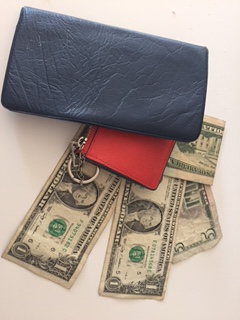
Sex and Money. The two topics that generate curiosity but can be pretty uncomfortable to discuss in general, and in regard to Alzheimer’s especially. I admit I am not ready to talk about sex, but money? I’m not sure, but because I’m in the middle of doing taxes, money is on my mind.

How much do we have? Enough. We are lucky. (Around the time Ralph was diagnosed he decided to “retire” from his business managing rental property, much of which we owned. We—meaning I–sold most but not all of the property to create a nest egg while we live day to day off the reduced income from the rental property we still own.)

How much do we need?Frankly our needs are much less on a daily basis. We seldom eat out and we are not buying “stuff” any more. Our medical costs, including Ralph’s medicines for most of the year, are pretty much taken care of by Medicare and our supplemental insurance. Lately I have shelled out for some costly business expenses, emergency building repairs, that have eaten into our income and that’s been a little scary—a hint of how things could change on a dime.

What are the money issues to come?  Housing and medical care. I have written before about the value of long term care insurance. We fortunately purchased it before Ralph’s diagnosis. I am hoping that if/when Ralph’s condition requires outside care, the insurance will kick in. But I worry that the glut of baby-boomer like us may bankrupt the long-care insurance companies before I need help so I am storing away funds just in case.                                                                                                        And then there is housing. Despite Ralph’s current conviction that he will never leave, at some point the farm is not going to be viable, and I will have to decide when, not to mention where we go from here. Will we be able to sell or rent out the farm for enough to afford our next living situation(s)? I don’t know but frankly I am not ready to think about myself yet.

How well am I making financial decisions, alone, concerning our future?  The truth is that I tend to go for easy decisions. And there are decisions—about whether to spend money on a given repair, how to keep our savings safe without losing ground, how to plan for our future needs. Ralph used to discuss these topics endlessly and we still discuss them, but he doesn’t remember from conversation to conversation what we last decided. I try to think what Ralph would do, but then I also remember that I did not always agree with what Ralph did when he was in charge. (I resent the money we are still shelling out to support bad decisions Ralph made about ten years ago—around when his cognitive loss probably began.)                                                                                                                                                        The real answer here is that at my accountant’s suggestion, I turned to a fee-based financial planner who advises me holistically and is available whenever I call with a question on the smallest issue. In some ways that financial relationship is more intimate than any other.

Post Script:

Before I posted this I had to run an errand. On the way home I stopped at Starbucks where man in line behind me was acting a bit confused in a way I recognized; when his wife explained that he had Alzheimer’s, I said so did mine. We began talking like long-lost friends (we use the same doctor and support system at Emory and are at similar points in the progression). One of the things she discussed the unmanageable cost of  sending her husband to a day program while she was at her job.                                                                      When I got home  I found a response to my earlier post about driving and Alzheimer’s: A woman, who doesn’t drive herself, has realized her husband can no longer driver due to Alzheimer’s. How is she going to solve that situation? Public transportation? Taxis? Uber?       I am suddenly struck anew by the financial realities that Alzheimer’s poses for so many and by the need for our support systems to come to grips with the needs presented. I realize I need to contact our local Alzheimer’s Association to see what services are offered and to volunteer to solve the problem of gaps between needs and financial cost—not where I expected writing about money to take me but it has…..

Alzheimer’s and Politics: Ralph’s Non-Vote

IMG_0157.JPG


Well I just got back from voting. Super Tuesday. A big deal.

I live in a voting district so politically lopsided that only candidates from one party (and not mine) run for national and state office. Usually my vote is so irrelevant that I have been known to write in “Anyone But…” on more than one occasion. So, as depressing as this political season has been, I felt a little twinge of excitement knowing that for a change my vote will actually matter.

I asked Ralph if he’d like to vote. After all, he listens to Public Radio every morning and watches the news every night. At various times he has declared Candidate X is definitely his candidate, or sometimes Candidate Y until I remind him he is for Candidate X (whom I am backing). He has laughed at stupid campaign ads and made astute comments about various candidates’ stupid statements. He has always voted.

Ralph said no, he didn’t feel like voting today. Then he asked what the issue was. I said the presidential primary. He still wasn’t interested.

His answer depressed me incredibly. In so many ways politics has defined our relationship from the start and now it is defining us in a different way.

When we met in the early 1970s, as the Nixon presidency and the Vietnam War were both unraveling, our romance centered on our shared political values. Or rather me sharing Ralph’s. We worked in the alternative press, and Ralph was passionate about his views. I remember sitting beside him on a couch as he went on and on about some theory or other while all I wanted was for him to shut up and kiss me.

Cut to the 1980s. Married with kids, and arguing a lot—a lot!!—mostly about decision-making; I found him controlling and he found me unsupportive. What we did not argue about was politics. We were both part of the small minority that voted for John Anderson in 1980 (although I had to look on the Internet just now to remember his name) and we both thought Reagan was not all there (little did we know, ironically enough). Our political agreement was important; I told myself that I could never be married to someone if I didn’t share his political beliefs

In the 1990s came the big shift. We moved to the country (another big argument that lasted for years) and midway through Clinton’s second term Ralph began to call himself a libertarian. “I’m not a Republican. I am Libertarian,” became his mantra. He was as passionate as a Libertarian as he had been when he was a socialist. I did not become a Libertarian, however, and was no longer susceptible to being swayed by any man.

In the first year of the new century, politics turned out to be a wonderful vehicle for arguments. We couldn’t watch the news together without fireworks, and the family dinner table became the set for great shouting matches, as our kids will attest. We railed against each other about taxes and the Mideast (although we still agreed on most social issues). Of course, under the political veneer our arguments were often about unspoken personal grudges and resentments we each nursed.

And now here we are in the most heated political atmosphere imaginable, and Ralph has gone lukewarm. He wants to be interested I think because he asks me frequently, “Who’s running again?” He cannot keep any of the candidates straight, although that may have more to do their deficiencies than with any cognitive deficiency on Ralph’s part.

The thing is, he would have voted today for whomever I suggested. While he listens to the news nonstop, very little of it sticks with him. This is not only a matter of memory. In part, his attention is turned more inward, but also he has a certainly mental hesitancy as if he doesn’t trust his own instincts. As a result I can easily convince him to agree with me, not only about the candidates, but also about any analysis of world events.

He now listens to me rail the way I used to listen when he railed. I admit I don’t mind being having an enthralled audience of one. I like being agreed with. I like being the one spouting righteous certainties. But this strange reversal is more bitter than sweet.

Driving and Alzheimer’s

driving_268131086


Memo to myself when I look back in years hence:

So six months ago our PA Stephanie asked Ralph how much driving he did alone. And he told her: the convenience store five minutes down the road; the Spanish grocery ten minutes away where our handyman likes Ralph to drive him to cash his checks; and Ralph’s therapist in Atlanta.

Since his diagnosis that weekly trip to the therapist has been Ralph’s big expression of independence and competence. He has his route down pat. He stops at the post office and checks to check our box; he takes a load of garbage to the dumpster at our old office; he picks up lunch at Burger King; he visits his therapist; he drives home.

Stephanie took notes, then warned us both to keep an eye on Ralph’s driving. Not so much his skill set but his sense of direction. She explained that a new detour can really be confusing for a driver with cognitive impairment and that the anxiety can made the driver too confused to find his way back on track.

When she suggested I start driving him to Atlanta, at least occasionally to make sure it was safe, Ralph and I immediately took umbrage…Ralph because driving is part of his sense of his identity as a competent man, me because I didn’t look forward to giving up a whole day every week to drive him back and forth. But the next week I made some excuse to ride with him into town—he was not about to accept that I needed to drive him—to make sure I was not just being selfish. As I reported to Stephanie on our next visit, Ralph seemed fine. In fact, he seemed to be a better driver, more cautious and careful.

Jump ahead to this past weekend. We drove together to the small Florida fishing town where Ralph was meeting his long-time fishing buddy.

Although I wasn’t comfortable enough with him driving five and half hours that I didn’t come along, I was pretty comfortable with him as driver since Ralph knows the way like the back of his hand. So on the way down I was happily drinking my coffee and relaxing beside him as passenger. Then I looked down to read a text, and when I looked up I realized Ralph had missed the turn. A major turn from one big highway to the next. A well marked turn that is hard to miss. We went an exit or two and turned around. I was a little tense and probably showed it more than I should have. Ralph was more than a little tense, but as I told him repeatedly in the next few hours, these things happen.

We got to Florida. Ralph calmed down and actually enjoyed himself more than either of us expected, thanks to a fishing buddy who is amazingly understanding about Ralph’s conversational loops.

Today we drove home. Ralph insisted that he wanted to drive. I was in the passenger but on alert when my phone rang. I looked down to find it, and when I looked up Ralph had missed the turn we needed to take. The turn he has taken hundreds of times. I stayed calmer this time, brushed the mistake off, said we didn’t need to turn back, that this way might actually be a short cut. But he was truly rattled. For the rest of the trip we had to discuss road numbers and I had to reassure him we were on the correct road.

Twice in four days may be a sign. Next week, I am driving with Ralph to Atlanta.

Mama Bear Beats Out Wife or Caregiver This Week

mama bea

Last week, I wrote about my role as wife interacting with my role as caregiver. Since then I have been reminded that my role as mother, even to my adult children, still takes precedence.

When my kids were little, Ralph used to complain, as young fathers evidently often do, that I prioritized the kids ahead of our relationship. He was right, I definitely did. I was passionately, perhaps obsessively in love with my son and my daughter. And for better or worse, I put them first. I was no Ayelet Waldman, but then Ralph was no Michael Chabon.

Then the kids grew up, damn them, and went on their far-flung ways. (What was I thinking raising them to be adventurous and independent?) Ralph and I went into marriage counseling where we finally learned to get along. Like so many empty nesters we entered a kind of second honeymoon, growing closer, rekindling genuine affection while also, at least on my part, developing my own creative and social life. After Ralph’s MCI-Early Alzheimer’s diagnosis, the dynamic between us changed again. For the last few years, as I’ve explained probably too many times, I have been in the wife/caregiver conundrum, trying to maintain my interests while needing to focus more and more energy on Ralph.

Well, Ralph is not my focus today. Tomorrow I leave to stay with my daughter while she has a minor medical procedure. She didn’t want me there at first but needs me to babysit my granddaughter. Of course as soon as she asked, I dropped everything. I have prepared meals and a friend has offered to visit Ralph but otherwise, until I sat down just now to close the computer down, I was not even thinking about the fact that I was leaving him on his own.

And Ralph is fine about that. He wants me with our daughter as much as I want to be there, but he doesn’t want to be there himself. Not that he doesn’t care. He does, his high anxiety showing as a spike in forgetfulness and napping as well as an intense desire to stay in his comfort zone at home.

I know he’ll be fine, or okay at least.

But really my head and heart are not focused on him. For the last five days, even though the medical procedure is minor, I have reverted back to Mama Bear mode. For the moment at least Ralph is again a lesser priority in my life.

ON LABELS, ROLES AND MARRIAGE WITH ALZHEIMER’S

Labels_610_300_s_c1_center_center

There has been quite a bit of discussion lately on the blogosphere about how to label or not label people with dementia, specifically whether the word “sufferer” is verboten. I am not yet brave enough to discuss the issue in detail [although basically I’m all for not labeling, but I’m also for being free to label myself any way I want without feeling as if I’ve broken some rule], but it’s got me thinking a lot about labels in general. Not so much Ralph’s as my own.

And maybe LABEL is the wrong word. Maybe I mean ROLE.

Over the last couple of years, I have grown to think of myself more and more as Ralph’s “caregiver” and have heard myself talk (pontificate?) about what being a “Caretaker” entails. It’s such an easy catchall phrase. But now I am beginning to rethink just how I should describe myself.

During the last ten years of my mother’s life I was the primary “family caretaker” although there were always professional caretakers on hand to do the often literally dirty work. She was in my house and I was the one making decisions about her care. I was the one writing checks to those care professionals out of our joint account. I was the one informing my siblings when I sensed a problem. (I was also the one complaining about my siblings and being complained about—butt-calls and miss-directed emails kept us all more informed than we’d like on both counts.) I was the one sitting in the emergency room at least once a month toward the end.

She became less and less my mother than my responsibility, my duty.  Ironically, that was when my patience increased. The unresolved conflicts between us became irrelevant, dissolving like the thread doctors use to stitch up torn skin. At some point I stopped feeling like a daughter.

But as fraught as the mother-daughter relationship can be, the husband-wife relationship  is fraught in a whole different way–especially in a marriage with a man whose mental world is shrinking while mine is not.

Am I more wife or caregiver? As much as my marriage and relationship with Ralph have changed, despite my new sense of being the decider, I am not sure which way to answer that question.

Because he still annoys me the way only a husband can. The other day he was repeating one of his boastful but charming stories for the third or fourth time in half an hour. That immediate repetition I didn’t mind—it’s the Alzheimer’s speaking—but I have probably heard that story over a hundred times in our life together, since long before any memory loss, and frankly I’m sick of it.

And because I still use that bitchy tone I have always reserved especially for him on occasions of mild to extreme annoyance. Although the issues are smaller these days than in the past, I’ve noticed that my annoyance can be just as extreme. What’s changed is that Ralph doesn’t shout at me or storm out the way he used to. Instead with earnest sincerity, he asks me not to use that tone because it makes him feel bad. And then I have a complicated wifely reaction of guilt and resentment, based on our history and all the times we made each other feel bad.

On the other hand, I still feel the need to get his opinion and advice, on business decisions, on family matters, on what blouse to wear. Of course Ralph used to be extremely opinionated, always ready to give advice whether I was ready to receive it or not. Now he is easily swayed by what I think and really has no opinion on most matters, political, social, or sartorial.

So, yes, Ralph’s reactions to daily life and to me have changed since his diagnosis of Mild Cognitive Impairment/Early Alzheimer’s. But I am not thinking about  Ralph right now, but about me, however selfish that sounds. I am worrying how I may be changing.

I have that luxury because Ralph’s mental state is on a plateau; his memory and other symptoms have held steady for the last year. Therefore our marriage is also on a plateau, part purgatory and part second honeymoon, as we watch for signs of the deterioration everyone agrees will be coming sooner or later.

Meanwhile my emotions regarding Ralph, while tempered by my awareness of his diagnosis and prognosis, are pretty much the same as they have been since practically the day we met: a crazy quilt of guilt, contentment, resentment, protectiveness, impatience, loyalty, recalcitrance, affection, annoyance, love and occasional hate.

And my self-definition—creative independent woman, passive helpmate, head of household, housewife, caregiver, care giving wife, wife who cares for, wife who wants to escape to Tahiti—remains constantly in flux. I am the woman I’ve always been, but I’m someone else as well. That caregiver word is there, stuck in the middle, not yet in capital letters.

IMG_0130(This crazy quilt belonged to my grandmother. Note the centennial snippet.)