Tag Archives: coping with a spouse’s cognitive impairment

Travels With Ralph

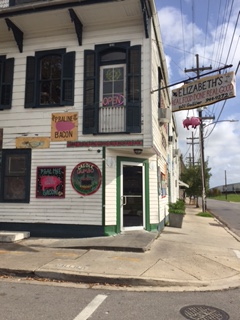
nola


This week was an adventure. Like all adventures, it offered highs and lows, memories I want to savor and some I’d rather forget.

Thanksgiving in New Orleans, with my daughter who lives here and with my son who met us there, was our first trip together, and Ralph’s first time away from the farm, in probably two years.

The last trip was to New York City for a wedding. He had no interest in making that experience into an actual vacation. He attended the official events, but otherwise I could not interest him in leaving the hotel even for a short walk around the neighborhood. All he wanted to do was nap. At the time I didn’t understand how much he needed those naps so I spent the two and half days in a general state of mild annoyance.

So, while I was thrilled at spending four days with my kids in a way we seldom do, and in a way we may not get to again, I approached this week with trepidation. As did Ralph. For the last month, each time he tried to remember the plan, I tried not worry if this much travel demanded more than he was capable of handling. Four days away from his familiar routine is a lot to ask.

On our trip to NY, the greatest stress for Ralph had been the actual travel—not only the time in the air but the airport with its crowds, its lines to maneuver and all the possibilities it offered Ralph to get confused or, worse, lost—our drive to Nola was actually pretty easy. For the six hours plus, I drove while he smoked and asked me questions over and over. We listened to the radio. It was actually kind of relaxing for both of us.

And he loved our small funky hotel in a converted mansion with its side garden where he could smoke….you might notice that smoking and Ralph’s ability to smoke has become a theme not only on this trip but in our life together.

These days I accept Ralph’s need for sleep and on this trip I made sure there was plenty of naptime. If anything, I let him sleep more than I do at home.

He needed to be as rested as possible because he was expected to take part in all activities with the kids. We ate great meals, we went for beignets, we walked along the river and down Magazine Street. We waited in line at Preservation Jazz Hall, where Ralph loved the music even though he had to stand the whole time. He loved laughing over jambalaya and drinks afterwards even more, loved walking through Jackson Square singing “The Battle of New Orleans” with my son-in-law as they vied to see who knew more of the words (a tie).

We spent Thanksgiving Day preparing a big meal at my daughter’s apartment listening to music, teasing, laughing, having the usual family spats and just hanging out together. Telling family stories Ralph was in his element, more the Ralph of years past than he has been in ages.

The description above is how I want to remember the week. But a shadow of tension followed me everywhere. “What’s the agenda?” he would ask and then ask again—questions I am used to answering over and over but my kids are not. At meals, I would suddenly realize that Ralph either wasn’t paying attention or had given up trying to follow the conversation the rest of us were having. Every time he needed to use the restroom in a restaurant I went on alert to make sure he could find his way there and back. He couldn’t follow the TV shows we sat around watching. Every few minutes he wondered aloud, “I wonder what the dogs are doing.” He went outside to smoke and went outside to smoke and went outside to smoke.

The good times, and they were good times, were a lot of emotional work for both us. I realized how much I have not only arranged my life around Ralph’s but how Ralph’s cognitive issues have played into my own tendencies toward over-planning and over-worrying, not only about him but about most areas of my life. What is most worrying is that I see how my own boundaries have narrowed, that I have to work doubly hard to keep myself engaged with the world beyond the parameters of Ralph’s MCI/Alzheimer’s.

Ten minutes ago Ralph climbed into the backseat of my car, headed back to the farm with my daughter and her husband who will fly off tomorrow on a vacation abroad (another anxiety producer given recent world events). I have stayed here in New Orleans to babysit my granddaughter for a week.

I know Ralph will be fine. He has been alone before, my son is going to stay on the farm with him a good part of the time, and various friends will be checking in regularly. His drugs are all marked, his calendar is filled in, there’s a week’s worth of meals ready, and I’m a phone call away.

But I am also a nervous wreck. Of course, maybe that has less to do with Ralph and more to do with taking charge of an 11-year-old girl who is a lot less easy to boss around than Ralph.

A Benefit of Ralph’s Cognitive Impairment–My Strengthened Self?

men-wanted-bargains-1433910-639x454

Last week I posted information about a study concerning the impact of Alzheimer’s on women. Since then I have found myself thinking in a more deeply personal way about how I have been impacted, specifically in terms of my sense of identity as a woman.

My (even) more self-centered than usual thoughts are flowing after spending a weekend with an old college talking and eating non-stop (the eating important since the setting was New Orleans).

Jane and I explored the challenges that shaped us over the last thirty years and the directions in which we are currently evolving. We talked a lot about whom we have each become and why. It turns out that we have remained alike in many ways—our politics, our private and social ethics, our taste in food, even our TV preferences.

But there is a major dividing line: I have a husband and children. She doesn’t.

In college, despite high ambitions and avowed feminism, we shared a tendency to let men we loved take over our lives including those ambitions. (Ironically, the fact that we were at different times drawn to the same young man brought us closer as friends.)  In our twenties, we each married a charismatic if self-absorbed man with big ambitions of his own.

Then our life paths diverged.

Jane’s marriage lasted only a few years. After the divorce, she went on to have an extremely fulfilling life with an exciting career and plenty of important friendships and relationships. After Jane’s early marriage to a dominating man ended in divorce, she went on to have an extremely fulfilling life with an exciting career and plenty of important friendships and relationships. She has her regrets, but she has developed an amazingly strong individual identity, which includes confidence that she is a woman who can take care of herself. She is not certain that she could have become that woman within the confines of a marriage.

My marriage—to Ralph—has lasted and my primary identity became tied up in being a mother and a sometimes resentful wife struggling not to be overshadowed by Ralph’s powerful personality. I fought to forge my own identity, eventually publishing several books including my first novel.

But I never put my ambitions first and in our shared life, I usually let Ralph get his way in decision-making. I would rail against the decisions he made—like to move us to a farm or buy a certain car—but I always went along. And when one of Ralph’s decisions went bad, as they sometimes would, I could always think not my fault.

Jane did not have that luxury. She had to make every practical and metaphysical decision concerning her life on her own, and then she had to live with the consequences.

So now she is a woman used to making decisions for herself, used to the tension and the fear and the joy, and I am a woman learning to make those decision for myself and for Ralph.

Making decisions alone requires a mental muscle I never adequately developed and now have to exercise. Ralph no longer has any interest in making decisions. Along with memory loss, his mild cognitive impairment has caused a major personality change. He is the passive one who cheerfully, and without the resentment I used to feel or any questioning, goes along with whatever I say.

I am not downplaying the reality of Ralph’s cognitive impairment and its negative aspects. But learning to cope with Ralph’s condition has created a potential for growth for me as a woman. It is scary and intimidating to be the decider, also liberating. I am learning what Jane learned over the last thirty years: to be strong-willed, self-reliant, independent, and in charge of my own happiness.

18 Months Post Diagnosis of MCI–Where Are We in Memoryland?

rings

I just realized that I began blogging about Ralph and me in April of 2014. Is that only a year and a half ago? It feels much longer, as if Ralph and I have gone through years and years of changes in the last 18 months. At the same time it feels as if the two of us are stuck and not moving forward at all.

FEELS is the operative word. Feelings are subject. Feelings can’t be trusted.

A lot of things happened—deaths, weddings, children moving away, friendships evolving, business crises. The accumulation of events big and small that form our lives. But how much as really changed in terms of Ralph and me. Have we moved deeper into Memoryland.

To gain perspective I went back to my first post to compare and contrast the salient points:

RALPH’S DIAGNOSIS:

Then: He “does not yet have the disease called Alzheimer’s. He has the CONDITION called MCI.”

Now: Still true as of his last test results at the Emory Memory Center

WHAT HE REMEMBERS:

Then: Impersonal facts like those on Jeopardy, His Meds, His Daily Routine, How to Drive

Now: He watches Jeopardy but not so much. He still retains facts, but not quite as many. He still can take his meds from his weekly box. His daily routine looks about the same on the surface although his actual day has shrunk. It is hard for him to get moving before 10 am or stay up past 8 pm. And he does a lot more sitting

WHAT HE FORGETS:

Then: Who people are. Conversations. Memories, especially bad memories…

Now: Fewer conversations are retained. More people and also facts seem lost. Old memories too.

WHO HE IS:

Then: “Sweeter than he used to be; less aggressive; more patient; less easily bored (because he doesn’t remember the twenty minutes of waiting for the doctor once it’s over); more in the moment.

But also less ambitious; less energetic; less adventurous; more passive; more dependent…Passionate about his farm and his dog…able to fix anything with his hands…a voracious reader.”

Now: Here is where the changes start. His personality is if anything even sweeter, even less aggressive. He no longer has an interest in analyzing numbers, facts and human nature. He may still be able to fix things with his hands but he doesn’t have much interest. Changing a light bulb becomes a major occasion, not because he can’t but because “it is so much trouble.” There has been a shift. A subtle withdrawal from the world we share that cannot be measured by memory tests.

OUR RELATIONSHIP:

Then: Eighteen months ago, I wrote, “although I’ve been warned there’s no telling how long before MCI begins chipping more deeply into his identity, Ralph is still himself in the most important ways.”

Now: I don’t know if I can honestly make that statement today. According to tests and my own comparison, Ralph is still functioning adequately with my support, but I have more trouble recognizing the man I married. There is a vacancy, a growing disconnect, that I sense but can’t measure.

Perhaps the greater change is not in Ralph at all, but in me. The relief I felt at first when we finally received a clear diagnosis for Ralph’s cognitive changes has shifted to something between acceptance and resignation. The support he requires weighs heavier.

We get along well on a day-to-day basis We still laugh together, usually in the mornings when he is sharpest, but we have less and less serious conversation either about the world around us or about ourselves. Sometimes, in a burst of ebullience, he’ll declare how much he loves me. And I love him, but the love is different and not exactly ebullient.

18 months ago I was a spouse learning with my husband to deal with his cognitive condition. Now I am not sure how to describe our relationship. I often feel more parental than wifely. But saying so feels (that word FEEL again) inaccurate and unfair. Because whatever we have become to each other and whatever we are becoming together and individually changes every day.

2 ALZHEIMER’S QUESTIONS NO ONE CAN ANSWER

DOES HE KNOW?    IS HE HAPPY?

These are the two questions people ask more than any others once they learn that Ralph is suffering cognitive loss due to Alzheimer’s.

Both questions should be easy to answer:    YES or NO.      Yet I can’t answer either for sure.

1. DOES HE KNOW?

What Ralph knows and what he acknowledges may or may not be the same thing.

He’ll be catching up with an old friend on the phone and I’ll hear him say, “I have a memory problem,” as if it’s just another inconvenience of aging like someone else’s arthritis.

I’ll show my annoyance about something he forgot to do, like feed the dog, and he’ll rightfully if self-righteously chastise me, “You know I have a memory problem.” Of course I immediately backtrack. (Not easy for an inveterate  nag).

But if the word Alzheimer’s comes up in general conversation, or more often in the media, he chooses to disassociate himself. There’s a TV commercial for Namenda that particularly bothers him because he  takes Namenda. He does not want to identify with the sweet old man on the screen. “I don’t have Alzheimer’s,” he’ll announce. “The doctor said I don’t have Alzheimer’s.”

Often I just nod. After all, his most recent cognitive tests show he is holding onto the smudged borderline between Alzheimer’s and Mild Cognitive Impairment. But if I slip and remind him, “The doctor explained what it means that you have the plaque build up associated with Alzheimer’s,” he’ll go very quiet.

And if I ask him pointblank how he thinks he’s doing, whether he senses any changes in his cognitive abilities (changes I do sense but don’t bring up), he says no, he’s fine. If I mention  a specific cognitive lapse, he denies it.

I understand:   He wants to be in control.

2.  IS HE HAPPY?

 He SEEMS to be, at least as happy as he’s ever been:

He laughs more. He’s less impatient. He loves his dogs. He loves his nutty buddy ice cream cones for dessert after dinner, which he also usually loves (without the critiques of my cooking he used to make). He loves his cigarettes and his lite beer. He loves sitting on the porch. He loves his farm. He says he loves fishing although he doesn’t often make the effort to fish anymore. He loves me, as he’s told me more times in the last six months than he ever did in the previous 40 years we’ve been a couple.

But what he’s thinking and feeling inside I don’t know. For a man who loved to talk politics and philosophy all night, he’s gone awfully silent.

And really, if you ask whether he was particularly happy before his memory began slipping, the answer would also be I don’t know. He’s always been moody, though less so now. And like many men of his generation, he’s never been big on revealing or analyzing himself.

Still, I can’t help wondering if boredom is the reason he sleeps so much now that he’s not interested in what’s going on in the world–or if not boredom, a desire to escape from thinking about his situation. He doesn’t voice the fears he must have about his future, and I don’t push him (well, a little) or ask point-blank if he is happy. I don’t want him to ask me back.

I am not sure how I would answer…

Alzheimer’s and The Downsizing Decision, So Far Deferred

Driving to the recycling center the other night, I was listening to NPR when a story came on about a man with Early Alzheimer’s. Naturally my ears perked up.

Journalist Greg O’Brien has been chronicling his advancing Alzheimer’s in a series of reports called Inside Alzheimer’s. For those facing their own or a loved one’s Alzheimer’s, especially in the early stages, this series from NPR is worth checking out. A range of subjects are covered from telling the kids to hallucinations, to caregiver anger. Not all the topics may be relevant to your situation but you’re bound to find one that connects.

For me it was definitely the piece the other night. Greg and his wife have decided together that it is time to sell their home on Cape Cod and downsize before his condition deteriorates. Greg talked about packing up with the help of his kids and about the pleasure of finding mementos that vividly brought back to life the family’s past.

As Greg talked, I knew Ralph was sitting at home on the porch listening to NPR and I worried how the story would affect him, wondered if he would compare himself to Greg. Because frankly I was comparing them—the same way I compare Ralph to all of my on-line friends who write such articulate blogs about the early stages of Alzheimer’s.

You are all so strong, so wise, so likable in describing your struggles.

I admit, I can’t help what I know is an unfair thought process: wishing Ralph could be more like you and push himself to live life to the fullest. Of course, I know that I am being unfair. It is as if I am asking Ralph to get over this cognitive glitch, as if he it’s his choice, so he can start remembering and I don’t have to be so responsible.

Greg’s involvement in deciding to sell his home was really hit me because I really don’t know how I am going to get Ralph to leave our farm. And the time is approaching. I spent the morning looking at real estate. I am thinking of moving us, at least part-time to New Orleans where my daughter and her new family have relocated so we can share childcare with Ralphcare.

Ralph knows this, sort of. Sometimes he can analyze the pluses and minuses with helpful perception. Sometimes he thinks spending time down there is a great idea. Sometimes he looks at me as if this new idea, which he is sure I’m presenting for the first time, is nuts.

This possible move of ours is the biggest  financial, emotional and logistical decision I have had to make since Ralph was diagnosed with MCI/Early Alzheimer’s. It affects both of us.

[I would love to hear how those of you in similar situations have decided when a change in housing is necessary–whether it’s been a matter of downsizing, moving into special housing, or even living apart–and how you handled the decision-making.]

Personally, this is the kind of decision I used to let Ralph make. I would offer my advice, would influence his thinking; but for all my feminist posturing, I preferred the more passive role—that way when things went wrong I didn’t have to take the blame.

Well those days are over. Women taking responsibility for our lives is great in theory, and probably in practice–I will explore the definite advantages of feeling empowered in another post soon. Right now I can’t remember what they are. All I am feeling is that I have no choice but to take on the power of decision-making for the two of us, and after a lifetime of back-and-forth compromise (mostly my compromise that I often resented), holding that power can be scary and lonely.

A Sympathy Card and Belated Thank You Note to Joan Gershman, The (Ultimate) Alzheimer’s Spouse

shutterstock_297001781

I just read Joan Gershman’s eulogy for her husband Sid Gershman on her site The Alzheimer’s Spouse. Sid died on June 15.

After twelve years of care giving and eight years of blogging about Alzheimer’s, Joan is taking time to grieve. In her eulogy, Joan is her usual down to earth, self-aware self. And loving in a way I can only aspire to be. Of course, I have often aspired to be more like Joan.

I discovered  The Alzheimer’s Spouse the week that Ralph was diagnosed with Mild Cognitive Impairment/Early Alzheimer’s. With dread I turned to the Internet to read up. I found academic articles, scientific studies, platitudinous advice columns. And then I found The Alzheimer’s Spouse.

This was only two years ago so the Gershman’s were already 10 years deep into dementia’s waters while I was just barely wading the shoreline.

Joan’s site has always been rich with information, but it was Joan’s spirit that grabbed me that night, her willingness to say the unsayable, to bare her wounds and scars. Her spirit and her survival mechanism. I remember sitting at my kitchen table pouring over her posts while Ralph slept in the next room. Here was a role model—a woman facing the reality of her husband’s deteriorating condition, sticking with him, but remaining a person in her own right.

I admit I am no Joan. I am more grudging about care-giving a husband with developing dementia. I am less willing to devote a lot of energy to researching the nooks and crannies of Alzheimer’s care giving in order to stay as up-to-date as I should with current knowledge. But that’s okay—Joan would understand. What I so love about The Alzheimer’s Spuse site is that while Joan has made available a library of knowledge about Alzheimer’s, bthe personal connections and revelations have always been paramount.

Each of us taking care of someone with cognitive impairment realizes that no two cases are the same, that despite statistics and research we each face different challenges.  Yet reading Joan’s words always remind me that we have a lot in common as well.

My Vacation from Caregiving–What Every Alzheimer’s Spouse Probably Needs

I took a vacation from Ralph last week, a road trip through Quebec with my oldest friend. (The photo is Quebec City at night.)Quebec City At Night

Two years ago I cancelled a trip with another friend to Europe just days before I was scheduled to leave because Ralph had an anxiety attack. He had just been diagnosed with MCI and, I realize now, feeling scared about his situation. This time, our niece, who is a nurse, came to stay with her three daughters aged 11 to 21, another nurse friend and my 11-year-old granddaughter. In other words, I could be guilt free about leaving him behind since Ralph was in his idea of heaven: getting lots of attention from  a harem of six charming females without having to leave home. (He did go out for one meal but mostly they brought him back take-out if he refused to accompany them places.)

Of course I did feel guilty anyway. As I walked down beautiful cobbled streets, bought the perfect silver earrings, spent leisurely morning hours reading over croissants and coffee, ate one wonderful meal after another, I could not help asking myself, “Why do I need a vacation anyway? Life with Ralph at this point is just not that hard, especially compared to what other people handle every day.”

Then halfway through the trip my niece texted, “I see why you need a vacation.” Ralph had been asking the same questions repeatedly the way he does when he gets on a jag, and he had been over-feeding the puppy with senior chow immediately after her puppy chow breakfast with predictably unpleasant doggy results. That my niece, a trained nurse, was finding Ralph exhausting was oddly reassuring and empowering. I realized that escaping the daily patience/impatience tension and being able to care for just myself was exactly the break I needed.

The relief I felt was bittersweet. But then I also had to admit another bittersweet reality: that I never much enjoyed travelling with Ralph even before his diagnosis. Our trips together were rarely successful because they brought out certain unavoidable differences in our approach to living. I like(d) to wander and explore. He liked a destination and goal. I enjoy(ed) the adventure of travel, the getting slightly lost, the disasters as well as serendipitous discoveries . He has always preferred to be in control. I even like(d) airports because they’re so divorced from daily life. Airports always made Ralph anxious even before Mild Cognitive Impairment made them overwhelmingly confusing. I used to force him to take trips with me to interesting places. Once we were there, I could seldom relax because I was working too hard to make the experience fun for him.

So much of what I write in my posts implies that I have lost something because of Ralph’s condition, implies a certain marital perfection that just wasn’t the case. I don’t want to idealize our relationship. Coming home I realize I need to face both the reality of the past and of the future. I want to recognize our past for what it was, not with phony nostalgia. Just as I need to recognize the reality of the changes, sometimes small and easy to miss, currently taking place in Ralph  so I can prepare better for the future that is inevitably coming by learning how to work the HVAC, how to spend evenings in solitude, how to travel and enjoy myself in general without guilt. When I come to think of it, I should know how to do all these things anyway.

Ralph and Lola

lola day 1

So we have a new puppy.

Ralph is devoted to his lab Zeus. The two of them spend most of Ralph’s waking hours together, up in Ralph’s office, where Ralph supposedly paints while Zeus dozes, out on the porch where Ralph drinks beer and smokes while Zeus dozes, or at the kitchen table where Ralph eats and reads while Zeus begs for scraps when he isn’t dozing. One reason I can’t get Ralph to go out to dinner, let alone away for a vacation, is that he doesn’t like being away from Zeus.

But Zeus is eleven, maybe older. He has epilepsy. And weighs at least 85 pounds. Big dogs don’t live as long as small ones. So for a while I have been worrying about what would/will happen when Zeus goes. We are not dog buyers usually. Our dogs have come to us through friends or through the pound or because they wondered up tagless. But given the reality of Ralph’s prognosis with Alzheimer’s, I began to think a companion dog with special skills might be in order. Plus I loved the idea of a non-shedding  fluffy dog and maybe a dog that was in the 30-pound range. I also worried that if I waited too long, Ralph would not be able to help with training a puppy—I am not by nature a dog person myself and have never trained a puppy. So last month I registered with a labdoodle breeder to be on the wait list for a mini-doodle puppy.

Evidently a labdoodle is not in my future however.

Because ten days ago I walked into my gym and my Pilates instructor announced she had just picked up a stray puppy and didn’t know what to do with it. The dog had wandered or been dropped at a busy neighborhood intersection. She’d already been to the vet who found no i.d. chip. Everyone in the gym was gaga over the lab mix puppy, which had on a collar but no tags and seemed underweight but not mistreated. With her pale blond coat and dark eyes, she looked like a mini-Zeus. Very mini. Whatever part of her is not lab is something small, a terrier or maybe a beagle. She—my teacher, not the puppy although come to think of it her too—gave me one of her most winning, beseeching smiles. I called Ralph. We agreed to foster the puppy and maybe keep it if no one claimed her. The signs and Facebook announcements were already going up.

Ralph immediately named her Lola, as in “whatever Lola wants…” My granddaughter came to visit and fell in love. So did my daughter. Zeus not so much. Ralph and I tried to keep our distance in case someone showed up. But Lola was, is, awfully cute. No one called. I took her for shots and signed her up for puppy class. She began to house train in earnest.

Which means I am house training her. I am also feeding her and teaching her to sit and come—as far as I’ve gotten in basic dog etiquette. Basically I do all the disciplining and getting up at the crack or dawn and at midnight for “do your business” walks. Ralph cannot keep straight what and when Lola eats or how much to feed or that she needs to go out when she whimpers, but Lola adores him and vice versa. He is the one she sleeps with on the couch. She follows him everywhere when she is not following Zeus, who has gradually learned to tolerate her. I admit I resent that she needs me as soon as I sit down at my computer, and I also resent that she prefers to snuggle with Ralph. It is baby rearing all over again.

But I realize it is good we have a dog to train now rather than later, when it would be too much for Ralph even from the sidelines. I was about to write this up this afternoon when my cell rang.

“Do you have Lola?” Ralph was calling although I thought he was downstairs with the dogs.

“No, you saw me go upstairs.”

“I came up to the barn. I thought you had her and now I can’t find her.” Basically, he couldn’t remember if he took her with him to the barn or left her in the house. I said something snarky that I shouldn’t have and ran downstairs calling her name.

“She isn’t in the house.”

“Stop blaming me. We have to find her!”

Ralph’s calm in a crisis was always one of his signature traits, but not anymore. He began to panic, the way he does these days.

I went outside and called her name but was worried myself. We live on acres and acres of pasture and farmland. It would take no time at all for a small dog to disappear. At the front of the house, I called again. She came running from the direction of the barn.

The good news: Lola comes when called and will probably grow into the perfect companion dog for Ralph. The bad news: I really can’t expect Ralph, who has raised countless dogs over the years, to keep track of the puppy he loves.
ralph and dogs

ps.  Ralph says he thinks we should get the labdoodle puppy for Lola to play with.

Learning to Love Ralph’s Mental Check Ups

“We” had “our” six month check up the other day at the Emory Memory Clinic. “We” and “our” are operative words because I probably get as much out of the appointments with our Nurse Practitioner Stephanie as Ralph does. The visits are medical but also psychologically therapeutic and unlike any other doctor visits I have ever experienced.

I admit it never starts well. Ralph asks if we really need to go all the way there (I have learned not to mention the appointment until that morning). And the waiting room time is always uncomfortable, Ralph and I  both secretly looking around at the other couples—everyone present is in a couple whether husband/wife, siblings, parent/child, or cared for/caregiver—trying to guess which person is the patient. I frequently realize I have guessed wrong when the person I assumed was impaired is the one who heads up to the nurse station to sign in. Ralph gets anxious because seeing people with his diagnosis but more advanced into cognitive impairment forces him to consider his own future. I get anxious for pretty much the same reason.

But once we are in the actual room, I am probably more myself than at any other time these days because we are together with someone who knows our situation, who does not look sympathetic but slightly askance at anything we say. This visit Ralph was to have a battery of tests to check his status. The tests take about 45 minutes; I actually thought of sneaking down to the second floor to say hi to a friend who works in the building. Instead those 45 minutes were filled with conversation with Stephanie about my concerns and worries. When I mentioned issues I don’t bring up anywhere else or to anyone else out of some probably misguided mix of embarrassment and guilt—and there are issues I do not bring up in my support group or even here—she responded with matter-of-fact solutions and understanding of someone who has witnessed all the permutations of cognitive impairment. My tendencies toward defensiveness, guilt, and self-justification melted. I could see clearly where I thought Ralph was on the continuum, that his memory seems to have held steady but his energy, curiosity and interest in the world has faded.

And then Ralph returned from his testing in buoyant spirits. He felt he had done really well on the test. And he had. Although he got more questions wrong than he thought, the score on his memory has held steady. (Shout of thanks to Namenda and donepezil.) He still qualifies as Mild Cognitive Impairment and is holding Alzheimer’s at bay.

We are scheduled to return to see Stephanie in six months. She said that if it was inconvenient since we come from a distance, we could skip that appointment. No way. I am looking forward to it.

An Evening with Ralph and Bob

Dylan that is.

The other night Ralph and I went to what was at least the fourth Bob Dylan concert we have attended together over the years. And since it was probably the last Dylan concert we will attend together, it was bittersweet. It has often felt as if our shared love of Dylan has been the glue holding us together as a couple despite major differences on politics, religion, childrearing, and who forgot to roll up the car windows before it rained.

Dylan has been a bond with our kids and our extended family as well. Ralph took his oldest son to a concert when he was about eleven and took our daughter when she was sixteen; our middle boy got gypped, especially given that he wrote at least one high school English paper on Highway 61 and looks a lot like Dylan (as do I according to one family joke). My daughter has kept all the vinyl records from our complete pre-1985 Dylan collection, but we still have a framed Milton Glaser graphic that came inside one of the album covers hanging in our bathroom. We also have a limited edition Dylan self-portrait print that my Dylan look-alike son gave us one x-mas and a long shelf of books by and about Dylan that my sister, another Dylan fan, has given us one at a time over the years. My daughter chose Forever Young for the father-daughter dance at her wedding last October, but first she and Ralph went through every Dylan song to find the lyrics that worked best. I am not mentioning all the hours of Ralph singing Dylan or the Christmas get-togethers set to Dylan instead of carols.

Yes, we are just a teensy bit fanatical.

Yet Ralph was not enthusiastic about going to the Dylan concert. He doesn’t listen to music much any more, and he considered getting dressed and driving somewhere (or being driven by me) “too much trouble.” But I pointed out that getting out of the house one night a week is literally what his doctor has ordered in a written prescription—she now writes prescriptions for things like “art lessons” and “no more than three beers a day”—so Ralph reluctantly agreed.

Of course our daughter and her husband were also going to the concert—she wouldn’t marry a man who wasn’t a Dylan fan– so we met them and some of their friends for funky Mexican beforehand. Ralph enjoyed the meal and the company although time and place anxiety kicked in as it does whenever he is out of his regular at-home groove. Fortunately I had reserved parking only two blocks from the venue, but Ralph, who strolls with his dog on the farm for hours, complained the whole five minutes that “we have been walking forever.”

There was a lobby full of people to contend with and the visit to the restroom, which frankly filled me with anxiety because it would be so easy for Ralph to get confused and lost. But all went well and we sat down in our seats just as the lights dimmed.

And there was that small 73 year-old man strutting his stuff and singing, in pretty good voice too, that he is “an artist, I don’t look back.” At other Dylan concerts purist Ralph has not appreciated Dylan experimenting with his arrangements, but this time he didn’t seem to mind  that Dylan only sang four or five songs that Ralph actually recognized, perhaps because he doesn’t remember the originals that well himself. And he loved Dylan’s harmonica riffs and his new version of Tangled Up in Blue. The new Ralph is non-judgmental. He just flows with the experience.

On stage experience and in the audience experience. In the past, Ralph might have been furious at the man in the row in front of us drunkenly spilling liquor everywhere and shouting requests for Isis when he wasn’t making out with his girlfriend. This time Ralph just laughed the guy off as part of the fun, a new story he might tell.

When we joined up with my daughter and her friends for a nightcap afterwards, Ralph told the story he has told ten thousand times, about when he was supposed to meet Dylan. Actually he told the store that night about six times before I stopped counting. For a man who goes to bed by eight every night, he was full of energy. I had to drag him away shortly after midnight. Walking back to the car, we passed a jazz club. Stopping to listen at the door, Ralph announced, “We need to come back here soon and do this again.” I agreed wholeheartedly, thinking what a magical night we’d had, how lucky we had this bond of music and family to remember. Maybe:

Ralph has not mentioned Dylan, the concert, or our night out since.