The Energizer Bunny Becomes Sergeant Bilko


When Ralph first received his diagnosis two years ago, memory was the big issue. Short term memory mostly, but also memory of past events and people. In reaction, I became a memory fiend for every factoid, date and name I could squeeze into my brain.

And since Ralph exhibited a new tiredness and a general decrease in energy, I became Ms. Energizer Bunny, joining organizations, making a bigger effort to connect with old friends and even make new ones, beginning projects and setting new goals for my writing.

But lately, not so much.images

When I was in my thirties my sister lovingly began to call me Sarge because I was over-organized and maybe a little bossy. Well, now I’m more like Sergeant Bilko, the inept TV character from the 1950s. I forget to sign checks, I lose my airplane ticket. Two nights ago I dragged Ralph to a friend’s house for dinner only to discover I had the nights mixed up.

I am finding it more difficult to rev myself up. I can get chores accomplished but to sit and think creatively—a deep sigh welled up out of my chest just typing those words.

We have been on the MCI/Early Alzheimer’s plateau for a while—and I am not complaining; I hope we stay here indefinitely since once we leave the plateau, the fall will be in one direction, down—but the adrenalin rush of discovering we have Alzheimer’s has worn off.

Oops, did I just write, “we have Alzheimer’s”? It’s a Freudian slip that makes sense. The reality is that the spouse of someone with Alzheimer’s is affected, not only by becoming a caregiver but also in deeper ways as a human being. The intimacy of a marriage, even a marriage with lots of freedom and independence and especially a long marriage, entwines the partners’ identities. Profound changes in one person mean profound changes in the other.

And there are few changes more profound than those caused by Alzheimer’s

Dementia in its Infinite Variety


variety of peopleI found myself in a fury the other day after reading a post about dementia terms to avoid by a well-respected blogger. How dare she tell me what I could say! I asked myself from my high horse. But then I took a breath and dismounted.

When I read about the experiences of others involved with dementia I often find myself reacting with a range of emotions I am not exactly proud to feel.

Sometimes I am jealous, reading about people who have been diagnosed with dementia yet seem able to articulate their situation in ways I cannot imagine Ralph doing.

Sometimes I am defensive, especially when I read about caregivers who seem a lot more selfless in their willingness to put dedicate themselves 24/7 to the care of their loved one.

Sometimes I am angry, when I feel harangued to behave only a certain way or use only certain terms as a caregiver. Along with that anger comes a large dose of intimidation, fear that I am not doing things the right way.

Even as I write that last paragraph, I want to backtrack, worried that I sound unsympathetic.

But the truth is that everyone’s situation is so different. Obviously being a person facing Alzheimer’s is different than facing Lewey Bodies is different than facing dementia caused by a stroke is different than…on and on

And being the person facing dementia in any form is different from being that person’s caregiver.

And caring for a parent is not the same as caring for a spouse. Caring for a husband is not the same as caring for a wife. Caring for someone in your home is not the same as caring for someone in a facility.

And even narrowing it down to wives of husbands with Early Onset Alzheimer’s, every marriage (every individual in that marriage) has a history before the onset that affects how we behave afterwards. I cannot speak for anyone else, not caregivers, whether children or spouses, and certainly not anyone on the Alzheimer’s spectrum.

This is all very obvious, but it seems important to remember every so often (for me at least).

We are all seeking a sense of commonality, the Aha! moment of recognizing our situation in the situation of others. And there is real sustenance to be gained in our connections. Yet sometimes I need to step back and acknowledge the differences as well. Doing so allows me to respect other caregivers and care receivers within the context of their specific lives but also frees me to accept my own strengths and limitations on my own terms.

Ralph’s “Best Christmas Ever”


IMG_0106

I was frankly not exactly looking forward to our celebration this year. Too many people, too much cooking and cleaning, too much money on too many gifts. Too many things to go wrong.

I could tell you all the things that in fact did go wrong, like the Christmas tree lights that stopped working, or the sibling squabbles that erupted (mine, not my kids), or my miscalculations on how many we could fit around the makeshift table which left us one seat short and everyone else scrunched uncomfortably together. Or the lost Kindle that probably ended up in a bag of garbage. Or the overabundance of leftover cookies and Trifle that have led to a horrifying number on my scale this morning.

IMG_0107

But really, the only one who suffered much this Christmas was Mr. Trump, whose face we smashed during Piñata Scrabble. He was filled with Scrabble letters and candies. The kids present attacked the piñata and then two teams of adults scrambled—and that is a euphemism for more warlike behavior; there was a scary moment when we had to scoop a three-year-old out of the melee—for the letters before each team competed for the most points through creating a crossword of words. This was serious competition that included a re-count before the captain of the winning team received her prize, a light up necklace.

Ralph watched Piñata Scrabble from the sidelines, but he participated fully in all the rest of the festivities. All three of his kids were home together for an extended period for the first time in years and he basked in their attention. He loved the store-bought tree. He loved the cookies. He loved our big Christmas Eve meal with the funny hats and jokes. He loved his stocking of gifts and the poster his granddaughter gave him. He loved sitting on our porch in the unseasonably warm weather, not alone for a change but surrounded by family and friends telling stories until three in the morning!

“Best Christmas Ever” he says, and says again.

The highpoint came about ten pm on Christmas Eve. I was washing dishes (of course) when I realized what was going on out on the porch. The music had begun.

Ralph’s oldest son, now a professional bagpiper and sitar player, was playing guitar duets with Ralph while everyone else sang along, Dylan tunes in the family tradition. Then it was just Ralph while the rest of us watched and listened under the flickering porch light. It has been years since Ralph last picked up his guitar, but there he was riffing and improvising, playing his heart out. All our hearts.

IMG_0096


PS. As I share this moment of pure joy, I can’t forget that others have suffered and lost loved ones this Christmas season and during the past year. May they (and all of us) find peace, consolation and new beginnings in 2016.

A Little Christmas Paranoia Ho Ho Ho


IMG_0103IMG_0097


I was driving to the airport with Ralph this afternoonto pick up one of our kids flying in for the holiday and a car swerved around me. One of those jerks going about twenty miles an hour faster than everyone else. At least that’s what I told myself, but it is possible that he was swerving to avoid some bad driving on my part.

I am not the greatest driver in the world—which would not matter except that for the last twenty-five years I have lived in my car commuting at least an hour each way to work, driving kids to school and various far-flung activities. Even the grocery store is a 20-minute schlep each way.

All of which is to say, I had an anxiety what if attack. What if I was in a car accident, or fell on the sidewalk as I am prone to do (broken ankle three years ago, split chin three weeks ago), or ate bad lettuce, or was infected with Ebola.

Usually I worry about myself in these scenarios, i.e. how my life would be affected. But this time my worry was a little different—

What I was out of the picture and Ralph was still here?


[Ok I know this is ghoulish and I am laughing at myself as I write, but holidays bring out my paranoid streak and I need to get the Christmas gremlins out of my systerm. If you don’t feel like humoring me, I understand. Feel free to stop reading here.]


I have set up some plans, one kid with power of attorney for financial matters, another for health issues. However, there is the issue of daily life. If I were not around, Ralph really could not live on the farm alone. He can take care of himself about the same way an 11 year-old boy can—lots of reminding before and cleaning up after. But Ralph is not ready or willing to have a paid keeper. [Odd to think, and I am a little ashamed to admit, that the decision will be easier down the road when Ralph’s condition has deteriorated further and there is no pretending that he can do for himself.]

Our closest kid lives a seven-hour drive away. None of our kids is equipped to have him move in at the moment. Maybe with financial help from the others, one could rearrange his or her living conditions to include Ralph, but as the sibling who cared from my mother in my home, I know how complicated it can be—and she didn’t have Alzheimer’s. I don’t know if I wish that on any of them. On the other hand, I can’t imagine Ralph in a facility without space to roam or his dogs to pet or his cigarettes to smoke.

And his level of anxiety at the idea of any change in his lifestyle (not to mention grief over my absence) would go through the roof.

So the answer is obvious: I have to drive and walk and eat and breathe with much more carefully so I can live forever.IMG_0099

Oh Christmas Tree Oh Christmas Tree

tree

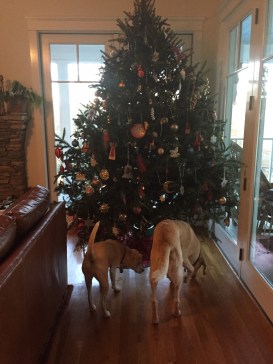
This is a pretty Christmas tree, no doubt about it. It is the tree I always wanted, the kind they sell on lots strung with white lights. The kind that doesn’t shed, that can hold all our decorations, even the heavy ones. Even the dogs love it (actually I bribed them with treats  to be in the picture; they are a little afraid of it).

For the last twenty-five years, I have not had a tree like this. Instead, Ralph and I with assorted children….

I have to stop here: A moment of déjà vu. Have I written this before?

Yes, a year ago. I just went back and found my little story about Ralph and me cutting our tree and the line For the last few years, Ralph and I have dragged along grandkids or nieces, city kids who try to be patient but quickly get bored traipsing through fields.

I forgot I wrote about our Christmas tree last year. Here is more from last year’s story,  the crux of  what I titled “A Little Christmas Joy”:

I expected Ralph to tell me that looking for a tree would be “too much trouble”– his current catch phrase regarding so many activities we used to enjoy. Frankly, in this case I was secretly thinking he might be right, that a bought tree, with its perfect limbs, might be a pleasant change from our usual Charlie Brown monstrosities. But Ralph surprised me.

He was eager to go out tree hunting. And he remembered for two days straight that we were going to go today. He even made sure we gassed up the truck before we started. And off we went… two sixty-something-year-old cynics driving around in a beat up truck debating over the perfect height and shape of straggly pine trees as if our lives depended on making sure we didn’t end up with a bare spot in the branches. And it was great….. I didn’t have to make myself remember what I used to enjoy about being married to Ralph; I simply enjoyed being with him.

Reading what I wrote a year ago is a jolt of reality. The annual Christmas tree hunt is the perfect metaphor for the ways in which Ralph and my life has changed.

Ralph was definitely not eager to get a tree this year. (When did Ralph stop saying things are “too much trouble? Now he says, “Tomorrow” and “I’m too tired.”) Every time I suggested it was time to go out tree hunting, he said “What’s the hurry?” I explained, less than patiently, that I wanted it up so I could get it decorated before I started cooking and baking for the crowd that will descend (and that I considered not inviting this year —all three kids and various assorted other family members and friends that add up to between 13 and 18 houseguests but who’s counting?–but am now glad are coming because Rick wants them here and by next year who knows).

This back and forth went on for days. I said, should I go buy a tree. He said no, we would get our tree on the farm as usual. I said, well let’s go out now to look. He said tomorrow. Tomorrow. And Tomorrow.

Then some friends came out for an afternoon visit. The idea was that the husband R. would take a walk with Ralph because Ralph’s daily “walk with the dogs”—his main exercise—has become a drive in the truck. No surprise that Ralph was not enthusiastic about a walk but he was willing to go tree-hunting in the truck with R. They returned quite proud of themselves, and reeking from snuck cigars, having marked two trees with colored ribbon.

The next day, at my repeated urging, Ralph and I went together to check out the tree. It was lovely. I said let’s cut it down. Ralph said, What’s the hurry? I’ll do it tomorrow.” I said, not entirely patiently, “We need to get the tree.” I arranged with our farm helper to meet Ralph  since Ralph said he’d lost his number. I  told Ralph,  “He can do the cutting down. You just need to be there.”

In my mind, I was letting Ralph stay in charge, which seemed important at the time, but now I wonder what I was thinking.  Why didn’t I go myself?

They returned empty handed. According to Ralph, the tree wasn’t as nice as he thought,  the saw blade was too dull, it was going to be a big job. I asked if we should get the blade sharpened. Ralph shrugged. Tomorrow.

I could see in his face that I was asking too much. I said, “Should I go buy a tree?”

He brightened immediately. “That’s a great idea.”

His relief was palpable. One more activity to struggle through off the list.

So after twenty-five years I have the tree I always wanted. But I am incredibly sad every time I look at it. It is a benchmark, a sad reminder of the changes in our lives– Our first Alzheimer’s Tree.

Post Travel Blues

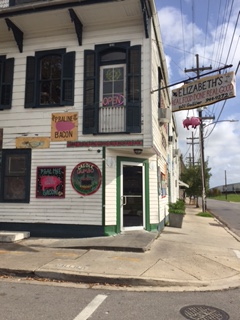
shutterstock_78323365For the last ten days, I was in New Orleans with my 11-year-old granddaughter, and Ralph stayed here on the farm with my son who lives in NYC. Actually, no, I have been back for four days, but I have had difficulty writing down words about how those days affected me.
Because they threw me into a slump I am still trying to crawl out of.

My actual time away was lovely. I drove my granddaughter to school and then spent the day working on final revision on my novel until it was time to pick her up. The rest of the time we played endless games of gin rummy, ate cupcakes, read and wrote—she’s begun her own novel (a little grandmotherly bragging slipping in).

And Ralph seemed fine when I called him multiple times a day. My son worked on his computer during the day, the way I never seem to get around to when I am home. He cooked dinner at night, or tried to—more than once Ralph forgot he was there and ate leftovers without him first—and they sat around talking.

The time together was a real gift for Ralph. My son is over 30, and I doubt they have ever been alone together for more than a few hours before in over 20 years.

It was a more complicated gift for my son. He recognizes that whatever memories he forms with his father now are important. But ….he found being with Ralph really, really difficult.

Although he offered to come again when he could to give me a break, he also admitted he found being with Ralph “annoying.”

“I don’t know how you do it,” he said as I drove him to the airport. The constant repetition, the inability to carry on a logical conversation. “It’s exhausting.”

So here’s what I have avoided writing: For months, years now, people tell me they admire my caregiving and I tell them it is not a big deal because that is what I tell myself, that my life has not changed all that much. But having another person in my shoes, alone with Ralph day after day the same way I am, and having him tell me how incredibly hard it was has thrown me into a tailspin.

I am feeling angry that after ten years of intense caregiving for my mother, I now face years of caregiving my husband. I am sad that after we worked so, so hard to save and improve our troubled relationship, after we found a way to be happy together, this damn Alzheimer’s has already chipped away at so much of it.Having been away, I see more clearly how Ralph is changing in ways I didn’t recognize before (and will write about soon).

And after four days home, I am in fact exhausted.

Travels With Ralph

nola


This week was an adventure. Like all adventures, it offered highs and lows, memories I want to savor and some I’d rather forget.

Thanksgiving in New Orleans, with my daughter who lives here and with my son who met us there, was our first trip together, and Ralph’s first time away from the farm, in probably two years.

The last trip was to New York City for a wedding. He had no interest in making that experience into an actual vacation. He attended the official events, but otherwise I could not interest him in leaving the hotel even for a short walk around the neighborhood. All he wanted to do was nap. At the time I didn’t understand how much he needed those naps so I spent the two and half days in a general state of mild annoyance.

So, while I was thrilled at spending four days with my kids in a way we seldom do, and in a way we may not get to again, I approached this week with trepidation. As did Ralph. For the last month, each time he tried to remember the plan, I tried not worry if this much travel demanded more than he was capable of handling. Four days away from his familiar routine is a lot to ask.

On our trip to NY, the greatest stress for Ralph had been the actual travel—not only the time in the air but the airport with its crowds, its lines to maneuver and all the possibilities it offered Ralph to get confused or, worse, lost—our drive to Nola was actually pretty easy. For the six hours plus, I drove while he smoked and asked me questions over and over. We listened to the radio. It was actually kind of relaxing for both of us.

And he loved our small funky hotel in a converted mansion with its side garden where he could smoke….you might notice that smoking and Ralph’s ability to smoke has become a theme not only on this trip but in our life together.

These days I accept Ralph’s need for sleep and on this trip I made sure there was plenty of naptime. If anything, I let him sleep more than I do at home.

He needed to be as rested as possible because he was expected to take part in all activities with the kids. We ate great meals, we went for beignets, we walked along the river and down Magazine Street. We waited in line at Preservation Jazz Hall, where Ralph loved the music even though he had to stand the whole time. He loved laughing over jambalaya and drinks afterwards even more, loved walking through Jackson Square singing “The Battle of New Orleans” with my son-in-law as they vied to see who knew more of the words (a tie).

We spent Thanksgiving Day preparing a big meal at my daughter’s apartment listening to music, teasing, laughing, having the usual family spats and just hanging out together. Telling family stories Ralph was in his element, more the Ralph of years past than he has been in ages.

The description above is how I want to remember the week. But a shadow of tension followed me everywhere. “What’s the agenda?” he would ask and then ask again—questions I am used to answering over and over but my kids are not. At meals, I would suddenly realize that Ralph either wasn’t paying attention or had given up trying to follow the conversation the rest of us were having. Every time he needed to use the restroom in a restaurant I went on alert to make sure he could find his way there and back. He couldn’t follow the TV shows we sat around watching. Every few minutes he wondered aloud, “I wonder what the dogs are doing.” He went outside to smoke and went outside to smoke and went outside to smoke.

The good times, and they were good times, were a lot of emotional work for both us. I realized how much I have not only arranged my life around Ralph’s but how Ralph’s cognitive issues have played into my own tendencies toward over-planning and over-worrying, not only about him but about most areas of my life. What is most worrying is that I see how my own boundaries have narrowed, that I have to work doubly hard to keep myself engaged with the world beyond the parameters of Ralph’s MCI/Alzheimer’s.

Ten minutes ago Ralph climbed into the backseat of my car, headed back to the farm with my daughter and her husband who will fly off tomorrow on a vacation abroad (another anxiety producer given recent world events). I have stayed here in New Orleans to babysit my granddaughter for a week.

I know Ralph will be fine. He has been alone before, my son is going to stay on the farm with him a good part of the time, and various friends will be checking in regularly. His drugs are all marked, his calendar is filled in, there’s a week’s worth of meals ready, and I’m a phone call away.

But I am also a nervous wreck. Of course, maybe that has less to do with Ralph and more to do with taking charge of an 11-year-old girl who is a lot less easy to boss around than Ralph.

Still Time:                                       A Novel About Shakespeare, Memory and So Much More

51TIY3hzhlL._SX331_BO1,204,203,200_

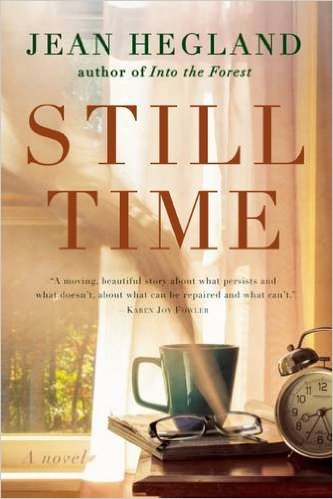
What a lovely surprise I found reading Still Time—an elegant, sharply intelligent but emotionally intuitive novel that happens to have as its protagonist a retired Shakespearean scholar spiraling into Alzheimer’s.

Shakespeare? Alzheimer’s? I admit I opened the book with dread. I am not a fan of issues-centered novels, including issues that affect me, in other words including Alzheimer’s. I dislike books that glamorize victims. I cringe at them when they’re pathetic and when they’re noble, perky, and uplifting. I avoid educational books; even the Alzheimer’s bible The 36-Hour Day left me cold. And I hate preachy books period, whether fiction or non-fiction, whether or not I agree with the basic message, political, spiritual, or nutritional for that matter.

And while I have more than a passing knowledge of Shakespeare, I can’t say that a novel promising to delve into literary criticism of his plays would exactly whet my reading appetite.

But Hegland held my interest in the Bard all the way through—well, there was a bit of skimming in some of the longer winded bits on Shakespeare.

As for the Alzheimer’s bit, Hegland is the first author I’ve read who makes Alzheimer’s both a central element in the novel and a metaphor for larger questions the novel raises about the human condition.

As the novel opens John Wilson is moving into a nursing facility . His beloved fourth wife Sally, who supports him, feels she has no choice. She cannot manage her work as a bee keeper and care for him any longer at home.

While Hegland takes us inside John’s interior world, particularly his rumination and meditations on language, time, and memory in relationship to his enduring passion for Shakespeare—he memorized his first play, Romeo and Juliet when he was 19—she does not pretend to explain Alzheimer’s. We see the shrinkage of his world, the graying and narrowing, but John is a very particular combination of mind and heart, not a generic representative. Not too many folks with Alzheimer’s express themselves most clearly in Shakespearian verse. Not too many husbands on the eve of being institutionalized joke lovingly to their beekeeping wife, “Beauty is in the eye of the bee holder.”

At Sally’s prompting  John receives a visit from his only daughter Miranda (named for Prospero’s daughter in The Tempest). The two have been estranged for ten years, ever since Miranda, then fifteen, accompanied John and his third wife to a literary conference in London. During the trip an incident occurred that scarred father and daughter in ways neither has been unable to share; each has therefore continued to misinterpret the other’s reaction.

So narratives lines from the present and the past twist together. John lives more and more deeply inside his mind, which remains alive to the language and the emotional resonance of Shakespeare’s plays even as he loses track of the concrete world around him. Meanwhile he and Miranda follow the confusing maze of their relationship to its center.

Miranda is not an academic scholar like John, but like him she is a lover for stories. And her talent and passion for video game art offer a provocative consideration of the creative experience and the evolution of creative forms.

At one point Miranda asks John which play is his favorite. Love’s Labors Won, he tells her and of course she thinks he means Love’s Labor’s Lost, but he explains, quite lucidly that Love’s Labor’s Won was actually registered but no copies have been found. Miranda understandably asks it the lost book is his favorite, “Because love won?”

“ ‘Because,’ he says impatiently, ‘it could be anything. It’s what we don’t…have, what we can only imagine. The possibilities.’ ”

Explore the possibilities of Still Time for yourself. I’d love to hear if you found it as profound as much as I did.

“Memory Loss Associated With Alzheimer’s Reversed For The First Time”–If It Sounds Too Good To Be True….

IMG_0006

A friend sent me a tantalizing press release concerning a study run by UCLA and the Buck Institute, which claims that a “Small trial by UCLA and Buck Institute succeeds using ‘systems approach’ to memory disorders.” (Note direct quotes from the press release will appear here in italics.)

Wow, a cure for memory disorder! In amazement, I stop reading.

So has UCLA had the major breakthrough we’ve all been waiting for and were told was years away?

And what is a systems approach?

I start reading again until I understand that what was involved was a “36-point therapeutic program that involves comprehensive diet changes, brain stimulation, exercise, sleep optimization, specific pharmaceuticals and vitamins, and multiple additional steps that affect brain chemistry.” This program was devised by Dr. Dale Bredesen of the UCLA Mary S. Easton Center for Alzheimer’s Disease Research and the Buck Institute for Research on Aging.

The real science involved here sounds controversial and is far beyond my ability to analyze. Most of us have been told that Alzheimer’s is caused by sticky plaque build up in the brain but Dr. Bredesen conducted a study that found “that Alzheimer’s stems from an imbalance in nerve cell signaling.” Therefore Bredesen says that “a broader-based therapeutic approach, rather than a single drug that aims at a single target, may be feasible and potentially more effective for the treatment of cognitive decline due to Alzheimer’s.”

And golly, 90% of those in the USCLA study “displayed subjective or objective improvement in their memories beginning within three to six months.”

A problem is that that there were only ten patients in the study. Having just read Thinking Fast and Slow by Daniel Kahneman, I am hypersensitive to misleading studies in general and studies with overly small pools of participants in particular. Ten patients is a pretty small pool.

Then there are the  “patients” themselves as described in the press release:

Patient 1 had two years of progressive memory loss. She was considering quitting her job, which involved analyzing data and writing reports, she got disoriented driving, and she mixed up the names of her pets.

Patient 2 kept forgetting once-familiar faces at work, forgot his gym locker combination and had to have his assistants constantly remind him of his work schedule.

Patient 3’s memory was so bad that she used an iPad to record everything, then forgot her password.

These three patients sound like Ralph at least five years ago, back when we were still joking about his memory slips. Actually they sound a lot like me right now.

Basically the pool was made up of “patients with memory loss associated with Alzheimer’s disease, amnestic mild cognitive impairment or subjective cognitive impairment (in which the patient reports cognitive problems.” No surprise that the “One patient who had been diagnosed with late stage Alzheimer’s did not improve.”

But still, that most did improve is good news.

The bigger problem for me is the breadth and intensity of demands from participants (and those who care for them). Bredesen’s program requirements include:

  • eliminating all simple carbohydrates, gluten and processed food from her diet, and eating more vegetables, fruits and non-farmed fish
  • meditating twice a day and beginning yoga to reduce stress
  • sleeping seven to eight hours per night, up from four to five
  • taking melatonin, methylcobalamin, vitamin D3, fish oil and coenzyme Q10 each day
  • optimizing oral hygiene using an electric flosser and electric toothbrush
  • reinstating hormone replacement therapy, which had previously been discontinued
  • fasting for a minimum of 12 hours between dinner and breakfast, and for a minimum of three hours between dinner and bedtime
  • exercising for a minimum of 30 minutes, four to six days per week

Bredesen said the program’s downsides are its complexity and that the burden falls on patients and caregivers to follow it. In the study, none of the patients was able to stick to the entire protocol. Their most common complaints were the diet and lifestyle changes, and having to take multiple pills each day.

The good news, though, said Bredesen, are the side effects: “It is noteworthy that the major side effects of this therapeutic system are improved health and an improved body mass index, a stark contrast to the side effects of many drugs.”

Just reading this explanation exhausted me. Call me lazy, call me selfish, but I can’t see Ralph and me signing up for this regimen any time soon.

Keeping the Stories Alive Part 2: My Infamous Adventures in Recording

IMG_ecorder

Many of you will be glad to know I followed your advice and have begun recording Ralph’s stories.

Sort of.

My saga of good intentions gone awry began a few days after my last posting–and the many comments encouraging me to get those stories down–when I brought up to Ralph the possibility of collecting his stories. He was not exactly excited.

“I can’t write it all down.”                                                                                                                                                 “Then we’ll tape them.”

“I don’t like my voice on tape.”                                                                                                                                                      “We can tape and then transcribe onto the computer.”

“I don’t type.”                                                                                                                                                                                     “I’ll do the transcribing.”

“I don’t have any stories worth telling.”                                                                                                                                          “Let’s make a list of ideas.”

“Why are we doing this again.”                                                                                                                                                          “To give as Christmas presents to the kids.”

That last seemed to get to him. So I wrote down a list of ideas and we talked a little about each until his memories of his youth started tiptoeing back.

The plan was that I record Ralph on a digital recorder—the kids would not want cassettes from the apparently obsolete machine I have used for years—and then transfer the stories to flash drives for the kids. My local Apple guy told me to go to Radio Shack for the best choices and assured me that all I needed to do was make sure the digital recorder was “Mac compatible”. That sounded easy.

I bought the recorder that clearly said “Mac compatible” and the guy at Radio Shack spent half an hour teaching me how to use it.

That afternoon, Ralph and I sat on the porch for our first story. The hog killing. He complained he could barely remember, but once he got started, there was no stopping him. One remembered detail sent him toward another. The result was a great story.

Ralph was hooked.

He immediately launched into a second story about his Aunt Della, including generations of family lore.

Then I tried to transfer the stories to my computer and save them. The directions, at least the ones in English, were vague at best. I was able to plug the recorder into the computer and a file would show up, but nothing would save. I am not the world’s greatest techy, but I sensed something was seriously wrong above and beyond my ineptitude.

Although Ralph was raring to go with more stories, I was afraid to continue.

I returned to Radio Shack the next morning. My still helpful clerk Corey couldn’t get the computer to save the recorded file. He suggested I go to the Apple guy. The Apple guy was also willing to help. After much fiddling and frustration, as closing time approached he graciously installed some kind of music program he was semi-confident would take care of things. If not, I was to come back in two days, after his day off, and he’d figure things out.

Guess what still didn’t work.

I went back. Apple guy called Apple. He then apologized. Being “Mac compatible” is evidently not adequate after all. I went back to Radio Shack. Although I had obviously used the recorder, Corey gallantly exchanged it for “MP-3 compatible.” Then he spent another half an hour teaching me how to transfer from recorder to computer.

I came home and told Ralph we’d need to re-record his the stories he’d already told because they were lost.

“Why are we recording these stories again?”                                                                                                                      “Christmas presents.”                                                                                                                                                                    “Oh yeah, that’s right.”

But it was already time for dinner and then bedtime. The next day I was tied up, then yesterday he had his art class. So here we are three days later.

Ralph is ready to start recording. He likes the idea of giving the flash drive presents. “It’s great we’re doing this.”

It will be. The problem is that now I’m not sure I remember how.