
Category Archives: Uncategorized

Ralph “Passes” the Test to Participate in Alzheimer’s Study

testing.jpg

The research nurse at Emory’s Brain Center called a week ago asking if we—Ralph and I because caregivers play an active role—would be interested in participating in a research study.  The nurse had already looked at Ralph’s chart and said she thought he’d be a good fit.

The study is  being conducted by the pharmaceutical company Merck  on a possible treatment to slow the progression of Alzheimer’s. As the Merck brochure says, “This study is designed to test the idea that inhibiting a specific enzyme, BACE, may slow or stop the progression of Alzheimer’s disease. The drug in this study, MK-8931, is a BACE inhibitor, which means it helps stop the BACE enzyme from producing amyloid beta peptides. Amyloid plaque deposits in the brain may be the underlying cause of Alzheimer’s disease. By inhibiting the actions of the BACE enzyme, it may in turn help stop the formation of those amyloid plaque deposits.”

In other words, the study hopes to find a way to slow down the build up of the plaque that is assumed to cause Alzheimer’s and that is evident in Ralph’s brain according to the spinal tap his doctor administered several years ago.

I glanced at Ralph, who was on the couch having his afternoon nap, and said yes, I thought we might like to participate. I was actually quite excited. In the past Ralph has not qualified for studies and drug trials like this because of his MRI problem—the bb pellet that has been lodged in his tongue since a shooting accident when he was eight-years-old not only uncomfortably heats up during the procedure but distorts results—but this particular study has dropped the MRI requirement.

The nurse immediately emailed the study’s descriptions and consent forms, which I read and explained to Ralph. And explained again.

“I hate taking pills.”/“You won’t even notice the extra pill.”

“How often will I have to go see the doctor?”/“Every other month.”

“What if I’m stuck with the placebo? It’ll be a waste of time?”/“But the study will give you the real pill afterwards, and in any case, the study will benefit others, like your kids who are at genetic risk.”

“Ok, it sounds good. But I hate taking pills.” The familiar loop repeated itself over and over, and each time he ended up agreeing to participate, if with tepid enthusiasm.

Three days later we were at Emory. (Evidently the study, which has already been going for a year or two, needed a few extra last-minute entries and the deadline got pushed up so we were a rush job.)

Ralph took two memory/cognitive tests which have qualified him although “passing the test” is not the term I’d use exactly, at least not for the second test in which the cut off number had to do with having too much memory. Ralph evidently “passed” with flying colors because his memory score was very low. I have to say when the nurse whispered the news to me, my heart sank a little.

Now we are waiting for Merck to look at the scores before scheduling some physical tests. If Ralph makes it through through those, he will begin taking the extra pill with his Namenda and Donepezil daily. There is a one-third chance or receiving a placebo, a one-third chance of receiving a lowish dosage of the medication, and a one-third chance of receiving a higher dosage. I will be expected to keep track of his progress in some form that has not yet been clarified—I warned the research nurse that I may be travelling some in January after my daughter gives birth, but she said that would not be a problem.

Once Ralph starts the pill, we will meet every two months with medical personnel, including his neurologist, a dermatologist and the research nurse, for the next two years. When the two years are up, if he’s been taking a placebo, Ralph will then receive the higher dosage of the actual medication; otherwise he will continue on the dosage he started with.

I see no downside (except, if I am honest, the extra effort required on my part) and plenty of pluses. Because we are entering the study late, there is plenty of knowledge about side effects—minor and rare. The frequent visits to Emory are a great excuse to get Ralph out of the house and into the world. Plus he will be receiving more detailed health check ups on a more frequent basis. We will no doubt have a better sense of where he is on the continuum than we do now.

And, although he says he doesn’t care, the idea of doing something useful for others, of being part of a cause larger than himself, will give him a sense of purpose; even at Emory the other day I saw the shift from anxiety (which may have caused his low memory score) to energetic good cheer as he interacted with staff.

And if the medication makes a noticeable difference in Ralph’s condition, well that would be great too. Fingers crossed.

Travel With Ralph (or Not)

map

For the last two weeks, Ralph and I have been discussing a trip scheduled for this Labor Day weekend to New Orleans to babysit our twelve-year-old granddaughter while my daughter and son-in-law take their “babymoon”.

I brought up the possibility to Ralph a month ago when they first asked me to help out. Since I was driving down there–Ralph has made it clear he never plans to step onto a plane again in his life–I suggested he might come along.

I suggested but assumed he would say no. Since the family moved to Louisiana a year ago, I have visited probably six times. Ralph has been once, for a family Thanksgiving, and he didn’t exactly enjoy himself. Staying in a hotel discombobulated him, and he missed his dogs.

But he must have been in a good mood when I asked, for to my surprise, he said sure he’d come. I started fantasizing (and I use that word purposely) about a pleasant weekend of good meals and maybe a visit to the WWII museum, which I told him he would love.

A week later I mentioned the trip in relation to something else going on and he didn’t remember our first discussion.

“Why are we going?” he asked.

I explained. He looked perplexed. “And I said I’d come?”

I nodded. He said, “Ok,” then promptly forgot all about the trip until the next time I brought it up. We’ve had the same conversation daily for weeks.

Each time Ralph sounded a little less enthusiastic. Meanwhile I was growing a little less enthusiastic too as the reality of what it might take to keep both him and my granddaughter happily occupied began to sink in. I’d been sort of bragging to friends that Ralph was actually coming with me this time, but I started hedging, saying that if he resisted I wasn’t going to force him.

The truth is that traveling with Ralph is no more fun for me these days than it is for him. He was never the most adventurous companion, but he was generally game. Now his anxiety and low energy makes every trip a complicated obstacle course of arrangements: limited activities, limited walking, no wandering, no spontaneous choices, a lot of naps. I hear how trivial these complaints are. All that’s required is patience and a willingness to slow down, but that’s the rub. A husband in his sixties with cognitive impairment is in many ways equivalent to a typical eighties something husband; I know I’m not being fair, but while I hang on to late middle age by my fingernails, I resent him dragging me into older age.

Yesterday we looked at the weather report for the weekend: thunderstorms. Now my granddaughter and I are perfectly able to occupy ourselves playing cards, watching movies and eating junk food. Ralph does none of the above. What he does when faced with free time, of which he has much, is smoke cigarettes outside on the porch. But my daughter’s apartment has no porch. He’d be sitting outside in the rain.

“You’re off the hook,” I told Ralph and breathed a guilty sigh of relief, thinking how much more fun I would have.

This morning I was starting to pack my single bag when the phone rang. My granddaughter has been invited by a friend’s family to spend Labor Day weekend at a beach resort. Evidently I’m “off the hook” too.

“Florence Foster Jenkins”–An Example of The Elasticity of Marriage and the Caregiving Spouse

938.jpg

I have learned most of what I know about history and society and morality from reading good novels and watching good movies (I admit I go to TV more for the escape). But fictional portrayals of family care giving in books and movies usually leave me cold. There’s too much sentimentality and nobility, or conversely cold conniving and self-interest.

When I saw Away from Her several years ago, I loved it for Julie Christie’s performance and because it moved me emotionally, but I wasn’t dealing with an impaired spouse myself at the time and accepted the soft focus presentation of  memory loss without question. I suspect that if I were to re-watch that movie  or Iris, based on the loving memoir by philosopher-novelist Iris Murdoch’s never-complaining husband, I might react with a little defensive impatience since everyone in both films  exhibits a niceness I obviously can’t always muster.

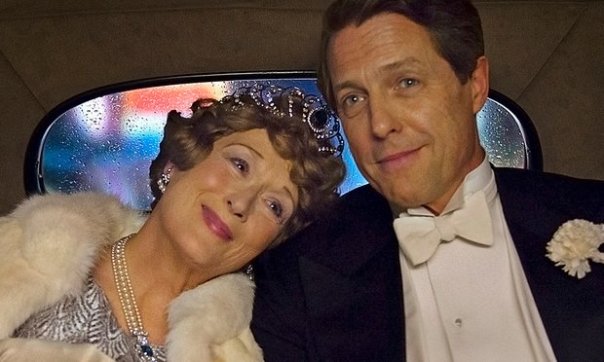
I certainly didn’t go see the new Meryl Streep/Hugh Grant movie Florence Foster Jenkins expecting to feel my soul exposed. But, I was shaken by how honestly it captures the complexity of a lopsided marriage in which one of the spouses has become the caregiver for the other.

The movie is about an actual Manhattan socialite known  both for her great philanthropy and for giving hilariously bad public concerts, including one at Carnegie Hall, despite having absolutely no singing ability, let alone talent.

I appreciated that there were none of the dreamy flashbacks or usual movie platitudes about cognitive loss that drive me crazy, maybe because Mrs. Jenkins does not have  Alzheimer’s. However  her ailment, with its own traumatic results, could be seen as an equivalent for the early twentieth century and required her husband to play a role many of us dealing with dementia issues will recognize.

And as good as Streep’s performance is in the title roll—and she is wonderful at making Mrs. Jenkins a real woman rather than an over-the-top caricature—even non-caregiver viewers will probably agree that Grant carries the movie.

Struggling to find my own balance as wife and caregiver, I found myself mesmerized by Grant’s performance as a husband forced to go beyond and at the same time fall short of normal spousehood. Others in the film might approve or condemn the decisions he makes concerning both his wife’s happiness and his own, but as Grant portrays him, the complex layering of his feelings for his wife at any given moment defies simple labeling like selfish or supportive.

And watching this husband try to keep his wife’s world intact as long as possible was painful and true—historically accurate evidently but also  emotionally real and close to home at least to me.

In other words, if you have a chance, go see it. And let me know what you think.

“I LOVE YOU”–Easier Said Than Done For Caregivers of the Cognitively Impaired

I happened to read a post at the Alzheimer’s Reading Room call Three Little Words. I am sure the article’s author Bob DeMarco is right. I realize that saying “I love you” is a wonderful thing to say. I am sure DeMarco is also right that changing patterns of behavior as a caregiver is a good idea.

kisses.jpg

But frankly I am not feeling it at the moment. I can hear you responding, that’s the point. If you say it, you will change how you are feeling and behaving. I get it intellectually and I don’t not love Ralph. But saying those words, and I do, sounds hollow. The truth, which is not always pretty, is that being together with him day in and day out is an emotional drain. Solitary even when we are in the same room and de-energizing because I tend to let myself drift into a slough of inaction with Ralph that I find both debilitating and anxiety-producing. (And yes, I know I should do things to make him more active, and I try, I really do.)

So, politically incorrect as this may be, I admit that I often put my own needs before Ralph’s these days. As I have said here before, we never had exactly an easy, or even happy marriage. I blame myself as much as him because I passively allowed him to be what he called “the captain” of the family, what the rest of us sometimes called the bully. My reasons were the usual complex mix of love, laziness, fear, and indecision.

Now, of course, Ralph is someone else altogether. As am I.

He has become the passive, gentle man who sat in the car today without complaining while I did grocery shopping on our way home from his aborted shrink appointment—for which he blamed not his therapist or me but himself for screwing up the dates and which despite the two hours spent driving in the car was not a complete waste of time because it gave his day a focus. The new jovial Ralph didn’t care that my run into Publix for milk turned into a full-fledged six-bag expedition.

Ten years ago, even if all I needed was a quick pint of milk, I would have driven him home and then driven back to the store we were passing on the way rather than argue over the practicality of adding an extra hour of driving to my life. For better or worse that weak-kneed version of Alice has disappeared. I have become a woman who tries to be diligent in her care but is seldom anything approaching affectionate.

Which brings me to this further shocking-to-me admission: Lately I have found myself transferring my affections from Ralph to another love object.

lola                I snuggle with Lola. I baby-talk to her the way I always made fun of other dog owners for doing. I encourage her to lie on the bed with me while I drink my morning coffee (especially since Ralph prefers to sit outside with his first cigarette). For the last month we have been taking classes together to make her more obedient. She now comes as soon as I call and stays sitting in “place” until I tell her otherwise. Along with obedience, she has become much more attached to me. All I do is look her way and she is by my side licking my ankle.


Ralph’s attachment comes with complications. Lola’s is much simpler (except that she eats my shoes). For me having Lola to love on has been a real help. And Ralph is not the least bit jealous.

Diaries and Dementia

diary

I want to pass on a link sent to me by my friend Caregivee, who has become my friend and conscience:

Caregivee sent me information about a new British study, “Carers’ diaries in dementia: Is there a role in clinical practice?”

I cannot verify the validity of this scientific study, which compared information recorded by 78 caregivers in daily diaries to what information caregivers gave in retrospect, but I was particularly struck by one conclusion:

“Our findings suggest that there may be a potential use of carers’ diaries in the assessment of dementia, in that they may identify more problems compared to relying solely on the retrospective account of patients and carers in clinic. More research using carers’ diaries in dementia covering longer period than a week may be required to ascertain other benefits.”

This study seems to suggest that by assembling the details from the diaries of many caregivers’ daily experiences–those small problems and/or solutions  that we forget about once they’ve passed, those fleeting reactions, those moments of clarity–health professionals may find ways to help caregivers improve caregiving and make the experience better for caregivees. We can use all the help we can get.

Although I may write here about my anecdotal experiences with some regularity, I have never been good about keep an actual diary. Perhaps I should start.

(But no promises that I can keep it up.)

Cognitive Impairment and Contentment, An Odd Couple

IMG_0255stress

Ralph and I have our best conversation while driving, the same way my kids and I did, and for the same reasons: we have each other’s undivided attention and we can’t escape.

So of course I was maneuvering my way through rush hour traffic the other day when he brought up his concern that his IQ has dropped seven points since what it was when he was a boy—this statistical tidbit from his first diagnostic testing lodged in his brain three years ago; he’s brought it up occasionally ever since but rarely so bluntly.

I responded that most people’s IQs probably drop as they get older, then added as an afterthought (how I tend to break bad news) that his memory loss has probably made his drop worse. He nodded. When I used the term Mild Cognitive Impairment, he flinched, but only slightly. (We don’t use the word Alzheimer’s aloud in our house.)

He brought up how well his medications Namenda and Donepezil have worked. He also said he was wasn’t worried that eventually they might stop working as well because his doctor had assured him that there will be new drugs in the process being discovered and he can take them when these stopped being effective—I don’t recall the doctor saying that exactly but I didn’t contradict him because, after all, who knows?

Then he took a puff of his e-cigarette and said, “Anyway, I’m content.”

“Did you say content?” I asked.

“Yes, I am very content these days.”

I could tell he meant what he was saying, not “fluffing the goods” as he likes to describe people whose stories he doesn’t believe. I felt glad for him, and definitely relieved.

But also, I have to admit, I was a bit jealous. Ok, a little resentful too.

Because I am not content with my life these days. It’s fine to be told what a good, caring wife I’ve become, but it’s kind of a backhanded compliment coming from friends with exciting careers going full steam ahead. Not that my career was ever that full of steam, but my ambitions have flagged. I find myself drifting along, adjusting my rhythm to Ralph’s, wondering if my own days of productivity are over along with his.

I’d rather blame the heat. Maybe once the temperature drops below ninety I’ll be full of focus and energy again, ready to care for Ralph and myself with equal vigor. I’m going to borrow from Ralph’s new playbook and assume the best….

When Our Light Bulbs Dim–The Literal Ones, Not The Metaphoric

This was our big accomplishment of the last few days: changing ten light bulbs (embarrassing to admit how many and never mind for how long).

I realize how trivial changing light bulbs sounds, but that’s the thing. What used to be one trivial, mindless activity handled along with hundreds of other trivial activities in the course of a day has taken on a new distinct weight given Ralph’s memory loss.

Obviously I could have handled this chore mostly by myself but decided I’ve been letting Ralph slide. Knowing how much to ask of him is a delicate balance, but I haven’t been pushing him enough to participate in our daily life, too often accepting his plea that he’s tired, in part because not pushing is frankly easier for me too. So if he’s been sliding, I have too.

It took me five days to corral Ralph’s attention, but the other morning I got him to walk with me from room to room upstairs and down, noting which bulbs were out and what kind of bulbs were required while I took notes. He unscrewed a fluorescent rod in the kitchen and a decorative bulb from the bathroom vanity to make sure we got the correct replacement sizes. Over the weekend  we drove to the store–I let him drive while I rode shotgun.

In the parking lot he agreed to bring in the fluorescent but became adamant that he didn’t need to take the decorative bulb because he’d remember it. I acquiesced, but once we were on the bulb aisle, the bulb choices overwhelmed us both (evidently, according to a friend I was telling about our excursion, bulb buying has become more complicated  for everyone these days) . Ralph had no idea which decorative bulb matched what we had. Not 100% sure myself and sensing his rising anxiety, I ran back to the car for the example from home. When I got back, Ralph was still in the row where I’d left him and had found a matching fluorescent rod but misplaced the bulbs we’d already picked out (something I might have done myself if if truth be told).

By the time we got home, Ralph was exhausted. I changed the bulbs I could reach. He took a nap. The next morning when I mentioned changing the rest of the bulbs, he gave me a blank look. But once I reminded him that we’d been to the store and here were the bulbs, he happily changed the fluorescent bulb. Then he took a rest. In the afternoon I reminded him again and he willingly changed three bulbs n the kitchen. This morning, I reminded him again and he changed the last ones, including a light on the stairs that was admittedly difficult–especially since one of the new bulbs was a dud–and required a ladder as well as much turning on and off of the switch.

We are now a house of working lights. What a sense of accomplishment!lights kitch15

I’m giving Ralph the rest of the day off, but tomorrow I’m plan on reminding him to change the oil in the lawn mower. It’s been a year.

Cognitive Testing-No News IS Good News

shutterstock_299388161-2

Annual Cognitive Testing Update—No News Is Good News

We went for what has been a semi-annual appointment at the Emory Brain Center yesterday and the news is a sigh of relief:

No change in Ralph’s memory from a year ago (ie still “awful” according to N.P. Stephanie, who was smiling because awful is much better than “getting more awful”)

Executive function holding steady

Problem solving holding steady

Mood, if anything, improved

Apathy and low energy, which N.P. Stephanie addressed by lowering the dose of Lexapro. If he doesn’t not appear more anxious, we may cut it out all together (although I suggested that I might require his portion)

Ralph allowed to drive his tractor but not drive his car alone except to the convenience store three miles down our own road

Alice allowed to leave Ralph home alone for several nights at a time as long as there are friends and Alice phone calls to check on his meds and meals


Actually the big change was that N.P. Stephanie suggested that, barring a problem arising, we skip our usual six-month visit and wait to return next July.

The Thorn Among The Roses

camping


Our fourth annual “Camp Mountain Creek” gathering of the cousins ended this morning. For the last eight days Ralph put up with three female adults (me, our niece and her friend) and four teen and preteen girls (our niece’s daughters and our granddaughter). Enough to wear out any man.

I have watched with fascination the evolution of the relationships among the girls as they mature. There used to be spats and hurt feelings that had to be soothed. This year they simply enjoyed one another. While there were shifting match ups there was no ganging up. The kids have created traditions they cling to (killer charades, skinny dipping, endless junk food) and have amassed stories they can tell and retell (scary moments, funny moments, angry moments, and serious moments like discussing racism and violence in America in light of the recent shootings). There were lots of tears when the cousins said goodbye.

I have also watched how their interactions with Ralph have changed. Four years ago he was at the center of things: taking them fishing, scaring them with ghost stories, driving them to Dairy Queen, and disciplining them on occasion.

Three years ago, they thought it was hilarious when he got a little lost on the way to McDonalds. Two years ago, they begged him to play Scattergories but he wouldn’t. Last year they couldn’t get him to tell his ghost stories.

This year we managed to get him to come with us for one meal out. He didn’t swim, despite temperatures in the nineties. He didn’t play games. He didn’t tell stories.

Mostly he enjoyed the girls’ presence at a remove. While he was not disturbed by the altered routine, the messy house, the noise, he did not go out of his way to be part of the activities. He kept up his daily routine—sleeping late, sitting on the porch, disappearing for an hour or two into his “office”, taking his afternoon nap followed by more time on the porch, dinner, and bed.

Sometimes he rallied. After enough teasing, he changed from jeans into shorts and sat with everyone by the pool one afternoon. Last night eating pizza at our last dinner together, he was as funny and engaged as ever.

The girls still adore him but they are old enough now to understand and want to discuss. I had to explain his diagnosis and what Alzheimer’s entails. The younger ones asked the older ones what he used to be like. The older ones talked about being “sad” over the changes they have noticed. They are all incredibly patient with him.

At first I was upset that they were so aware of Ralph’s diminishing self. But a friend pointed out that they were experiencing the life cycle first hand. She’s right. These girls will never forget their carefree weeks together on the farm, and sharing not only the joyful but also the bittersweet will make those memories all the more powerful. I wish I could be around to hear them reminisce about their “Uncle Ralph” and “Oppa” when they get together thirty years from now, as I have no doubt they will.

IMG_0379

RALPH MY HERO– THANKS TO ALZHEIMER’S

HERO


I have been carping a bit lately about the tensions, anxiety and frustrations of being an Alzheimer’s spouse/caregiver.

But today I want to crow about the upside.

Today Ralph is my HERO.

A specific moment of heroism: At the crack of dawn this morning, my walking buddy and her husband came by to go blackberry picking out at our big stand of blackberries in a field that’s a good long walk from the house. Ralph was still asleep. Although he had reluctantly come out to pick a few days earlier, I let him sleep in this time. My friends and I picked a couple of baskets worth of berries before the prickles got to us, not to mention the heat (85 degrees by 8:30).

As we were about to head in, I realized I didn’t have my new prescription sunglasses and couldn’t remember if I had worn them out to the field. We looked around the bush but didn’t find them. I prayed they were at home.

They weren’t. I looked all over the house, in my car, all the usual places. No glasses. By now Ralph was up and dressed. He willingly drove me to the field. And then he actually got out of the car and looked with me.

We walked carefully around the bush, but I saw nothing and was about to give up when Ralph asked, “Are these your glasses?”

YES.

I hugged him. And then I hugged him again when we got home. I cannot tell you how elated I was that he found them. Elated out of all proportion (although new glasses would have been expensive). And of course he basked in my elation and appreciation.

The reasons Ralph’s finding my glasses was so pleasing:

  1. He actually offered to drive me and he willingly got into the heat and looked with me. And he was so good-natured about it.
  2. This is the pattern of his behavior now:  If I ask him to bring me a cup of coffee or clear the dishes or bring in the groceries, he does it with a smile.          If I ask him to wait, he is patient in a way he never used to be…sit in the car while I run an errand, no problem; wait for a late dinner while I finish up in my office, no problem.    If I want to watch a TV program he let me turn the station; if I turn on the radio before he’s ready to wake up, he doesn’t mind; if I watch TV after he’s gone to sleep he doesn’t mind.
  3. He never loses his temper. Our grandkids/nieces tell me he is the nicest grandfather/uncle they have: affectionate and funny.
  4. In other words, he is kind of a sweetheart.

Note to myself: Remember this moment and these feelings later….