Category Archives: Caregiver/Spouse Issues

Celebration When You Don’t Feel Like It


This has been a strange, difficult week. The world is topsy-turvy, fear and loathing rising in so many hearts, tempers short—even among people who agree—and tears flowing. Since Tuesday’s election, most of my friends and family are either numb or angry or both.

cards

Nevertheless, last night I hosted a dinner part for Ralph’s 70th birthday. A month ago when I asked him how he wanted to celebrate his birthday, he said he didn’t want to celebrate it at all.

But that felt wrong. So I decided to make his favorite dinner, roast chicken with mashed potatoes, and invite only people he is genuinely comfortable with these days.

I invited everyone over a week ago. But on Wednesday I thought of cancelling the dinner. Five of the seven invited were/are in major distress and the other couple I was afraid to ask because I politics is a touchy subject. I was afraid the “celebration” might turn into a verbal brawl or be lugubrious at best. But my depressed friends said no, push on.

Ralph was oblivious. He is well aware of the election but he was mostly just not happy we were having a bunch of people over. “Why celebrate that I’m getting old.” As I slaved over a lemon meringue pie filling that wasn’t thickening, I wondered why I was bother myself.

First to arrive was our friend N, who called ahead to ask if she could wear her Hillary t-shirt, since she doesn’t plan to wear anything else for days or weeks to come. I said sure. Then the rest of the election mourners came. They are friends with us but didn’t know each other. Usually that would make for awkward moments, but last night they had plenty to share and discuss. The wine flowed as fast as the conversation. Once our more conservative friends arrived, the politics dropped but the funny cards were opened. And the perfect Ralph gifts: cigars, a pouch labeled BEER MONEY and filled with quarters, and an antique lighter. He was in his element.

We ate our chicken and mashed potatoes (delicious) and our lemon pie (runny). We told stories about and toasted Ralph. We laughed a lot. At the end of the evening we all hugged.

It was cathartic and a lovely reminder that life goes on.

Then just before everyone was out the door, someone glanced at his cell phone:           Leonard Cohen had died.

“It doesn’t matter which you heard/The holy or the broken hallelujah”

As I said, life has to go on.

The Business of Remembering…A Sense of Time and Identity

The business of remembering what you did that day, or what you might want to do the next, I think, is essential for creating an overview of your life – that overview is what fuels plan-making and that ties in deeply with identity.”

shutterstock_155952698.jpg

In case you missed it, this comment was made about my last post by  Jabberwalk, who writes with great insight and honesty at her own site Caregiving in the Forest.I can’t stop mulling over the implications.

Time is the trickiest part of life for Ralph. Almost the first thing he asks each morning is what day of the week it is. Sometimes he remembers what he did or parts of what he did yesterday, sometimes he doesn’t. Often he misremembers. He doesn’t like the confusion his lousy short-term memory breeds, but he lives with it by asking for a rehash over and over hoping for clarity that seldom comes.

We all fear the loss of short-term memory, but the problem of future memory is in some ways more troubling. When Ralph looks forward to what comes next, what he seems to see is an anxiety-producing obstacle course. Since he can’t hold on to the facts of place and time, he becomes increasingly anxious each time he asks again Where? but mostly When? The issue for me becomes how much information does he need, how much is a burden.

Not only do I make the scheduling decisions, but I also end up structuring what he thinks about that schedule, and therefore what he thinks about period. In other words, I am taking away or at least shrinking his overview.

His sense of identity has certainly shrunk. Yes, he is an increasingly passionate dog lover because dogs demand so little and remember on their own. And he remains a husband, not an equal partner perhaps but genuinely grateful to his wife for filling in the blanks. He is still a father too, although his memory of the kids’ childhoods is sketchy and he keeps up less and less with their adult lives because he finds tracking the details so difficult. He was glad to let go of his professional identity and hand me that responsibility early on. While he can be charming in social encounters, his interest in friendship and being a friend is limited by his difficulty remembering who people are, their names of course but more importantly, their connection to him. While still capable of moments of remarkable perception, he is no longer interested in being an intellectual or armchair philosopher because it requires remembering a train of thought.

I remember lots of trains of thought. I carry around layers of overview based on the different roles I play—wife, writer, friend, woman, businessperson, spiritual seeker, reader, political thinker, mother (Note that caregiver is not on this quickly written list—a Freudian slip I just noticed myself).

These roles operate within and are influenced by the various ways I frame my time. There is the constant background hum of long-term, generalized plans still under construction (i.e. How much longer until we need to downsize? What are my options if/when needs professional care?). More immediately, there is the weekly erasable-board calendar that Ralph and I live by day-to-day; there is the monthly wall calendar as well as the one on my phone. And there is the semi-conscious minute-by-minute and hourly tracking most of us fold into our routine (unless we are on the Alzheimer’s continuum and struggle to remember whether we ate lunch already) without much conscious thought.

But what has always been almost second nature, like making coffee as soon as I get up in the morning, is getting more difficult. Lately I have trouble both keeping my plans organized and keeping a hold on my sense of self within those plans, largely because of the important role-identity I just caught myself forgetting to include above. Caregiver, leads to another identity: AliceasRalph.

Keeping Ralph’s life organized and reminding him what he is doing on a given day means I also remind him why and how he feels, which means I make an effort to get into his head to understand his mindset. Thus is born AliceasRalph, who often ends up as confused as he is by his confusion about whatever I am trying to explain. Our weirdly opaque discussions can sound like the old WHO’S ON FIRST comedy routine.

Ralph’s overview of his life, if not lost entirely, is definitely tangled. And because I am both Alice and AliceasRalph, my overview is pretty tangled too. Not hopelessly, but moving forward requires vigilance as I ceaselessly work to untangle the delicate filaments without breaking them.

shutterstock_147393377

What Is Normal Anyway?

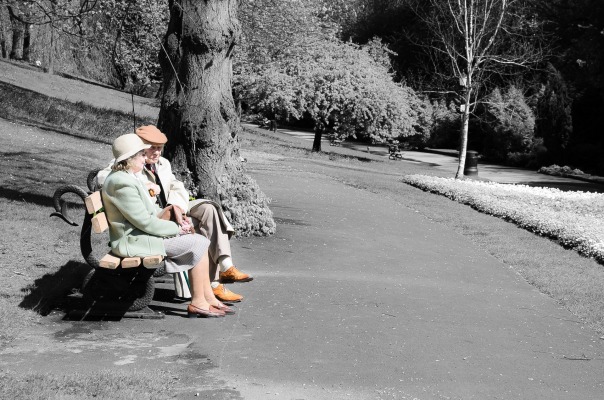
people_in_the_park_204264 Is this the couple  Ralph and I are becoming? Jaunty hats and sensible shoes? Would it be so bad if we were them? Don’t they  look  happy and normal? But what is normal?

As I look at the life Ralph and I share now, I can’t help wondering.

When he was first diagnosed with relatively advanced Mild Cognitive Impairment, Ralph was in his mid-sixties and considered young to be jumping on the Alzheimer’s escalator. Now he is approaching 70 and those  symptoms—fogginess, lack of energy, loss of short-term memory, disengagement—that seemed so out of keeping with our peers a few years ago fall more comfortably into the gray area called “the aging process.”

And after all aging  is normal and even desirable  (the alternative being death) although it hits us each differently. For example, I called Ralph’s oldest friend the other day; the two have drifted out of touch over the years but Ralph still talks affectionately about Jim and I thought reconnecting  and reminiscing would be nice for them both to do while Ralph still can. Jim was excited at the prospect of re-connecting with Ralph but we couldn’t actually talk until  he put in his special hearing aid for phone use.

In that moment it occurred to me as it has before that while Ralph remains on his plateau of not-quite-Alzheimer’s-yet, his issues are not radically different from other men his age, at least according to what I hear from the women my age who live with them. So many of my friends complain that their husbands are slowing down faster than they are, that they no longer want to travel, that they’re becoming stay-at-homes, that they are more passive than they used to be, that they need to be cared for, that they require a lot of patience.

And we women have our own issues, or at least I do. The sleep issue—never more than six hours and often less, with the resulting sense of dull tiredness and desire for an afternoon nap. A nap for God’s sake! Ugh. The driving issue—is my driving getting worse or am I just more nervous? The concentration issue—much harder to turn off the wifi and buckle down (although maybe this problem will go away after election day). And of course the fashion issue—not that I ever dressed fashionably or learned to use make up but nowI either look as if I’m trying too hard or not hard enough.

The thing is, I still do feel younger, still want to fight aging, while Ralph has embraced it. Our day-to-day life has fallen into a frankly pretty comfortable pattern set largely by Ralph’s needs and wants. The pattern scares me because I find it enticingly easy to fill so much time dealing with minutia concerning managing Ralph’s care, our finances and our household, especially since my social life has actually expanded as Ralph’s has contracted. If this is this my new normal, it is not all bad? But I worry, where is my zest for the intellectual and creative ambitions that have always defined me before?

In a weird way I am almost heartened personally by the current election season in which two of my peers slug it out with vigorous, and in one case even brutal, energy (although I’m not saying their “normal” is the one I want). I want to believe I can still find that kind of passion and energy in myself. But maybe not, and maybe that’s okay.

Sorting out what is normal under my circumstances, or what is normal under any individual’s individual circumstances, is not easy, but it is where I find myself.

(PS. Last nightI asked Ralph, as I always do, if he’d talked to anyone during the day. He said no. I checked his phone. There was Jim’s number at the top of received calls; evidently they’d talked for over half an hour.)

Ralph “Passes” the Test to Participate in Alzheimer’s Study

testing.jpg

The research nurse at Emory’s Brain Center called a week ago asking if we—Ralph and I because caregivers play an active role—would be interested in participating in a research study.  The nurse had already looked at Ralph’s chart and said she thought he’d be a good fit.

The study is  being conducted by the pharmaceutical company Merck  on a possible treatment to slow the progression of Alzheimer’s. As the Merck brochure says, “This study is designed to test the idea that inhibiting a specific enzyme, BACE, may slow or stop the progression of Alzheimer’s disease. The drug in this study, MK-8931, is a BACE inhibitor, which means it helps stop the BACE enzyme from producing amyloid beta peptides. Amyloid plaque deposits in the brain may be the underlying cause of Alzheimer’s disease. By inhibiting the actions of the BACE enzyme, it may in turn help stop the formation of those amyloid plaque deposits.”

In other words, the study hopes to find a way to slow down the build up of the plaque that is assumed to cause Alzheimer’s and that is evident in Ralph’s brain according to the spinal tap his doctor administered several years ago.

I glanced at Ralph, who was on the couch having his afternoon nap, and said yes, I thought we might like to participate. I was actually quite excited. In the past Ralph has not qualified for studies and drug trials like this because of his MRI problem—the bb pellet that has been lodged in his tongue since a shooting accident when he was eight-years-old not only uncomfortably heats up during the procedure but distorts results—but this particular study has dropped the MRI requirement.

The nurse immediately emailed the study’s descriptions and consent forms, which I read and explained to Ralph. And explained again.

“I hate taking pills.”/“You won’t even notice the extra pill.”

“How often will I have to go see the doctor?”/“Every other month.”

“What if I’m stuck with the placebo? It’ll be a waste of time?”/“But the study will give you the real pill afterwards, and in any case, the study will benefit others, like your kids who are at genetic risk.”

“Ok, it sounds good. But I hate taking pills.” The familiar loop repeated itself over and over, and each time he ended up agreeing to participate, if with tepid enthusiasm.

Three days later we were at Emory. (Evidently the study, which has already been going for a year or two, needed a few extra last-minute entries and the deadline got pushed up so we were a rush job.)

Ralph took two memory/cognitive tests which have qualified him although “passing the test” is not the term I’d use exactly, at least not for the second test in which the cut off number had to do with having too much memory. Ralph evidently “passed” with flying colors because his memory score was very low. I have to say when the nurse whispered the news to me, my heart sank a little.

Now we are waiting for Merck to look at the scores before scheduling some physical tests. If Ralph makes it through through those, he will begin taking the extra pill with his Namenda and Donepezil daily. There is a one-third chance or receiving a placebo, a one-third chance of receiving a lowish dosage of the medication, and a one-third chance of receiving a higher dosage. I will be expected to keep track of his progress in some form that has not yet been clarified—I warned the research nurse that I may be travelling some in January after my daughter gives birth, but she said that would not be a problem.

Once Ralph starts the pill, we will meet every two months with medical personnel, including his neurologist, a dermatologist and the research nurse, for the next two years. When the two years are up, if he’s been taking a placebo, Ralph will then receive the higher dosage of the actual medication; otherwise he will continue on the dosage he started with.

I see no downside (except, if I am honest, the extra effort required on my part) and plenty of pluses. Because we are entering the study late, there is plenty of knowledge about side effects—minor and rare. The frequent visits to Emory are a great excuse to get Ralph out of the house and into the world. Plus he will be receiving more detailed health check ups on a more frequent basis. We will no doubt have a better sense of where he is on the continuum than we do now.

And, although he says he doesn’t care, the idea of doing something useful for others, of being part of a cause larger than himself, will give him a sense of purpose; even at Emory the other day I saw the shift from anxiety (which may have caused his low memory score) to energetic good cheer as he interacted with staff.

And if the medication makes a noticeable difference in Ralph’s condition, well that would be great too. Fingers crossed.


My Car Is My Caregiver


img_0598

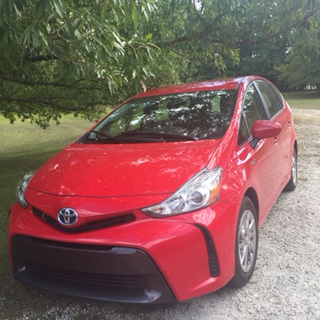
Dear Red Prius,

My first car was a bright blue sedan that I drove to Atlanta when I was 22. I don’t remember the brand, only that I hated how visible it made me, especially since I was not the best driver.

I traded the blue bomber in for a used telephone “van” that had been refurbished by Ralph—his first entrepreneurial venture was buying and fixing  up used phone trucks, then selling them to counterculture types like me; the streets of Midtown Atlanta were full of Ralph’s trucks in the early 1970s.

The brakes went out on my van a week after I bought it. I was rounding a curve and ended up down an embankment. Fortunately I wasn’t hurt. Naturally Ralph felt terrible. He helped me fix the van and sell it.

(Actually, Ralph disputes my car history, says I got the blue bomber after the truck disaster, and he may be right. In any case I don’t remember what I drove next.)

We got married five years later, and for the next multiple decades I drove a series of practical, second-hand sedans (with baby seats), SUVs (for carpools and horse-trailering), and (once the kids were gone) compacts. They were all non-descript, aside from the dents I added, and I could care less.

A year and half ago, though, I got you,  Red Prius. I bought you for practical reasons like gas mileage and comfort, etc., and I admit that I chose your red color because you were cheaper than the silvery blue model.

The irony is that these days what I love most about you is your color. It makes you  So Visible, so easy to spot among the sea of tans, blacks, grays and whites on every road and in every parking lot.

I often find myself writing here about the difficulties, the frustrations, the borderline depression care-giving causes me. I think one of my secret worst fears is that my memory is going too. I said this to a friend recently and she laughed, “But Ralph isn’t contagious.”

Maybe not, yet I often feel as if my brain is clogged with the details of thinking for two. An adage of care-giving is that if we are tense or irritable, our cognitively impaired spouses (or parents) sense and react in kind. The flip side is that I am vulnerable to catching Ralph’s anxiety, and when I’m anxious my brain does not function at its best.

Lately I have an urge to simplify: the less I have to worry about the better. Less stuff means less stuff to keep organized and clean without Ralph’s help. Fewer commitments mean fewer complications to arrange for Ralph. But I also want to stay active and involved. Simplification can be a slippery slope that I don’t want to begin sliding down too fast.

Red Prius, you have been a godsend. It takes one item off my overloaded mental table—no more walking out of the supermarket or doctor’s office or bank or lawyer’s meeting or movie theater or restaurant or political meeting worried where I parked. One glance each way or a click of my key button and there you are, Red Prius, brightly reminding me that I am in control, at least to the best of my ability…A small comfort maybe, but it’s the small comforts that count.

So thanks for making my life better Red Prius. I promise to take care of you as well as I take care of Ralph.

Gratefully,

Alice


BRAGGING, NOT RAGGING, ON RALPH

hands

Lately, I’ve been complaining a lot here about the difficulties of living with Ralph as his cognitive skills wobble and wane. While I hope that my honesty in voicing frustrations as I explore ways to manage as caregiver-spouse has been useful to others, I know I sometimes lose perspective (thank you to friends here you rein me in).

So it’s good to be reminded that life is not a straight line, especially when Ralph is doing the reminding:

1.The day after the contractor incident earlier this week (see ), Ralph asked me whether he’d had an argument with a contractor and what was it about. I told him, trying to soft peddle as best I could.

“Oh well, we can replace the system if he thinks it’s necessary,” he shrugged.

Despite my expectations, he hasn’t brought the subject up again, except to        acknowledge that he is embarrassed by his own behavior. Pre-diagnosis Ralph was almost Trump-like in his inability to apologize for mistakes so I consider his contrition a sign of emotional growth.

2.Then yesterday, while listening to the news, he made a comment so astute I must share it with you all. Someone on the radio complained about political correctness and Ralph stopped sipping his coffee to say, “Why would anyone want to be incorrect about politics or anything else?”

Why indeed? I borrowed his observation and posted it on my facebook pages where “likes” flowed in. Although he may not remember the details, Ralph can still cut through to the chase.

3.The kicker is a conversation we had an hour ago. Periodically I must drive to St. Petersburg, Florida, to manage the affairs of a disabled cousin. Since it’s a seven-hour drive each way, I have to spend the night. I long ago gave up on getting Ralph to come with me. Last year I drove down with a friend who also has (difficult) family to visit in the area. Another friend may drive down with me next week; she needs a break and I’ve bribed her with the promise of a gourmet meal, a nice hotel and the Dali Museum. But she has warned me she might have to cancel at the last minute.

Ralph must have heard me talking on the phone about the trip as he was napping on the couch because out of nowhere, he sat up and OFFERED TO COME WITH ME. Note the capital letters in red ink. I was/am flummoxed.

Whether he comes or not is not the point—and frankly, I’d hate to have him miss his art class, which is so important in his mental life (one week wouldn’t matter but he has to miss class the next week too, ah the complexities of Ralph’s usually empty schedule!).

The point is that he is still capable of breaking through the Alzheimer’s shell of inward-gazing to think about someone else’s well being, and that someone else is me, not as his caregiver but as his wife whom he wants to take care of.

So at the moment I am feeling an emotion that our relationship doesn’t often raise in me  lately—I ‘m not talking about affection, although I am feeling that too, but gratitude that this particular man is in my life.

NO MORE MOPING


img_0545

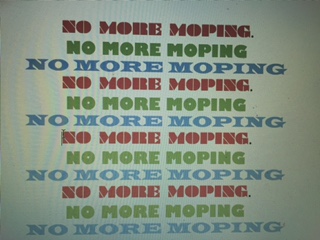
I woke up this morning saying those words to myself. Which is a good thing.

The truth is lately Ralph has been getting on my last nerve. When he starts on one of his loops—lately his favorite has been the history of our dogs and the order in which they died—I tense up and cut him off saying I don’t want to talk about it. When he gets confused following simples directions or an explanation, I am dismissive. When he lights yet another smelly cigarette, I want to pull my hair out.

I could go on with a litany of complaints about Ralph and admissions about my behavior/attitude. But there’s no need, is there? Probably, hopefully, I am making myself sound worse here on the page than Ralph would say I am in real life. And if I am in a state of constant annoyance toward Ralph, I am in an even greater state of annoyance toward myself.

The thing is that sometimes I forget that living with MCI is a slog not a sprint. What I unfortunately don’t forget is that there is no end in sight, at least no good end.

The other thing I forget is that while we are in this together, we are also each in this alone. While I can try harder to empathize, I cannot know what Ralph is going through, and I can’t expect him to know what I am handling. I have to take responsibility for managing my frustrations and creating my joys. When I don’t, when I slip into blaming everything on the MCI, life goes downhill.

I am sure I will slip again, but for now, the sun is rising above the trees, the dog is chewing her fake bone, the coffee is brewing and all’s right, or at least okay, in this corner of the world.

img_0544

Travel With Ralph (or Not)

map

For the last two weeks, Ralph and I have been discussing a trip scheduled for this Labor Day weekend to New Orleans to babysit our twelve-year-old granddaughter while my daughter and son-in-law take their “babymoon”.

I brought up the possibility to Ralph a month ago when they first asked me to help out. Since I was driving down there–Ralph has made it clear he never plans to step onto a plane again in his life–I suggested he might come along.

I suggested but assumed he would say no. Since the family moved to Louisiana a year ago, I have visited probably six times. Ralph has been once, for a family Thanksgiving, and he didn’t exactly enjoy himself. Staying in a hotel discombobulated him, and he missed his dogs.

But he must have been in a good mood when I asked, for to my surprise, he said sure he’d come. I started fantasizing (and I use that word purposely) about a pleasant weekend of good meals and maybe a visit to the WWII museum, which I told him he would love.

A week later I mentioned the trip in relation to something else going on and he didn’t remember our first discussion.

“Why are we going?” he asked.

I explained. He looked perplexed. “And I said I’d come?”

I nodded. He said, “Ok,” then promptly forgot all about the trip until the next time I brought it up. We’ve had the same conversation daily for weeks.

Each time Ralph sounded a little less enthusiastic. Meanwhile I was growing a little less enthusiastic too as the reality of what it might take to keep both him and my granddaughter happily occupied began to sink in. I’d been sort of bragging to friends that Ralph was actually coming with me this time, but I started hedging, saying that if he resisted I wasn’t going to force him.

The truth is that traveling with Ralph is no more fun for me these days than it is for him. He was never the most adventurous companion, but he was generally game. Now his anxiety and low energy makes every trip a complicated obstacle course of arrangements: limited activities, limited walking, no wandering, no spontaneous choices, a lot of naps. I hear how trivial these complaints are. All that’s required is patience and a willingness to slow down, but that’s the rub. A husband in his sixties with cognitive impairment is in many ways equivalent to a typical eighties something husband; I know I’m not being fair, but while I hang on to late middle age by my fingernails, I resent him dragging me into older age.

Yesterday we looked at the weather report for the weekend: thunderstorms. Now my granddaughter and I are perfectly able to occupy ourselves playing cards, watching movies and eating junk food. Ralph does none of the above. What he does when faced with free time, of which he has much, is smoke cigarettes outside on the porch. But my daughter’s apartment has no porch. He’d be sitting outside in the rain.

“You’re off the hook,” I told Ralph and breathed a guilty sigh of relief, thinking how much more fun I would have.

This morning I was starting to pack my single bag when the phone rang. My granddaughter has been invited by a friend’s family to spend Labor Day weekend at a beach resort. Evidently I’m “off the hook” too.

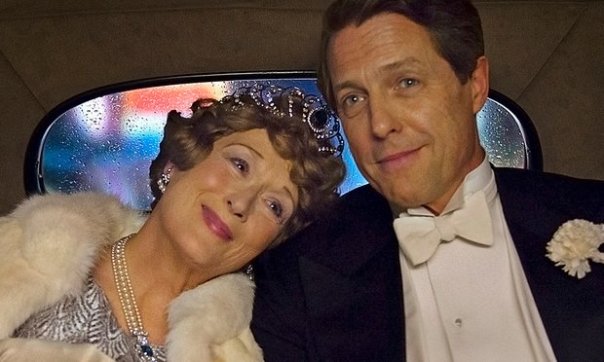
“Florence Foster Jenkins”–An Example of The Elasticity of Marriage and the Caregiving Spouse

938.jpg

I have learned most of what I know about history and society and morality from reading good novels and watching good movies (I admit I go to TV more for the escape). But fictional portrayals of family care giving in books and movies usually leave me cold. There’s too much sentimentality and nobility, or conversely cold conniving and self-interest.

When I saw Away from Her several years ago, I loved it for Julie Christie’s performance and because it moved me emotionally, but I wasn’t dealing with an impaired spouse myself at the time and accepted the soft focus presentation of  memory loss without question. I suspect that if I were to re-watch that movie  or Iris, based on the loving memoir by philosopher-novelist Iris Murdoch’s never-complaining husband, I might react with a little defensive impatience since everyone in both films  exhibits a niceness I obviously can’t always muster.

I certainly didn’t go see the new Meryl Streep/Hugh Grant movie Florence Foster Jenkins expecting to feel my soul exposed. But, I was shaken by how honestly it captures the complexity of a lopsided marriage in which one of the spouses has become the caregiver for the other.

The movie is about an actual Manhattan socialite known  both for her great philanthropy and for giving hilariously bad public concerts, including one at Carnegie Hall, despite having absolutely no singing ability, let alone talent.

I appreciated that there were none of the dreamy flashbacks or usual movie platitudes about cognitive loss that drive me crazy, maybe because Mrs. Jenkins does not have  Alzheimer’s. However  her ailment, with its own traumatic results, could be seen as an equivalent for the early twentieth century and required her husband to play a role many of us dealing with dementia issues will recognize.

And as good as Streep’s performance is in the title roll—and she is wonderful at making Mrs. Jenkins a real woman rather than an over-the-top caricature—even non-caregiver viewers will probably agree that Grant carries the movie.

Struggling to find my own balance as wife and caregiver, I found myself mesmerized by Grant’s performance as a husband forced to go beyond and at the same time fall short of normal spousehood. Others in the film might approve or condemn the decisions he makes concerning both his wife’s happiness and his own, but as Grant portrays him, the complex layering of his feelings for his wife at any given moment defies simple labeling like selfish or supportive.

And watching this husband try to keep his wife’s world intact as long as possible was painful and true—historically accurate evidently but also  emotionally real and close to home at least to me.

In other words, if you have a chance, go see it. And let me know what you think.

“I LOVE YOU”–Easier Said Than Done For Caregivers of the Cognitively Impaired

I happened to read a post at the Alzheimer’s Reading Room call Three Little Words. I am sure the article’s author Bob DeMarco is right. I realize that saying “I love you” is a wonderful thing to say. I am sure DeMarco is also right that changing patterns of behavior as a caregiver is a good idea.

kisses.jpg

But frankly I am not feeling it at the moment. I can hear you responding, that’s the point. If you say it, you will change how you are feeling and behaving. I get it intellectually and I don’t not love Ralph. But saying those words, and I do, sounds hollow. The truth, which is not always pretty, is that being together with him day in and day out is an emotional drain. Solitary even when we are in the same room and de-energizing because I tend to let myself drift into a slough of inaction with Ralph that I find both debilitating and anxiety-producing. (And yes, I know I should do things to make him more active, and I try, I really do.)

So, politically incorrect as this may be, I admit that I often put my own needs before Ralph’s these days. As I have said here before, we never had exactly an easy, or even happy marriage. I blame myself as much as him because I passively allowed him to be what he called “the captain” of the family, what the rest of us sometimes called the bully. My reasons were the usual complex mix of love, laziness, fear, and indecision.

Now, of course, Ralph is someone else altogether. As am I.

He has become the passive, gentle man who sat in the car today without complaining while I did grocery shopping on our way home from his aborted shrink appointment—for which he blamed not his therapist or me but himself for screwing up the dates and which despite the two hours spent driving in the car was not a complete waste of time because it gave his day a focus. The new jovial Ralph didn’t care that my run into Publix for milk turned into a full-fledged six-bag expedition.

Ten years ago, even if all I needed was a quick pint of milk, I would have driven him home and then driven back to the store we were passing on the way rather than argue over the practicality of adding an extra hour of driving to my life. For better or worse that weak-kneed version of Alice has disappeared. I have become a woman who tries to be diligent in her care but is seldom anything approaching affectionate.

Which brings me to this further shocking-to-me admission: Lately I have found myself transferring my affections from Ralph to another love object.

lola                I snuggle with Lola. I baby-talk to her the way I always made fun of other dog owners for doing. I encourage her to lie on the bed with me while I drink my morning coffee (especially since Ralph prefers to sit outside with his first cigarette). For the last month we have been taking classes together to make her more obedient. She now comes as soon as I call and stays sitting in “place” until I tell her otherwise. Along with obedience, she has become much more attached to me. All I do is look her way and she is by my side licking my ankle.

Ralph’s attachment comes with complications. Lola’s is much simpler (except that she eats my shoes). For me having Lola to love on has been a real help. And Ralph is not the least bit jealous.