Tag Archives: caregiver anxiety

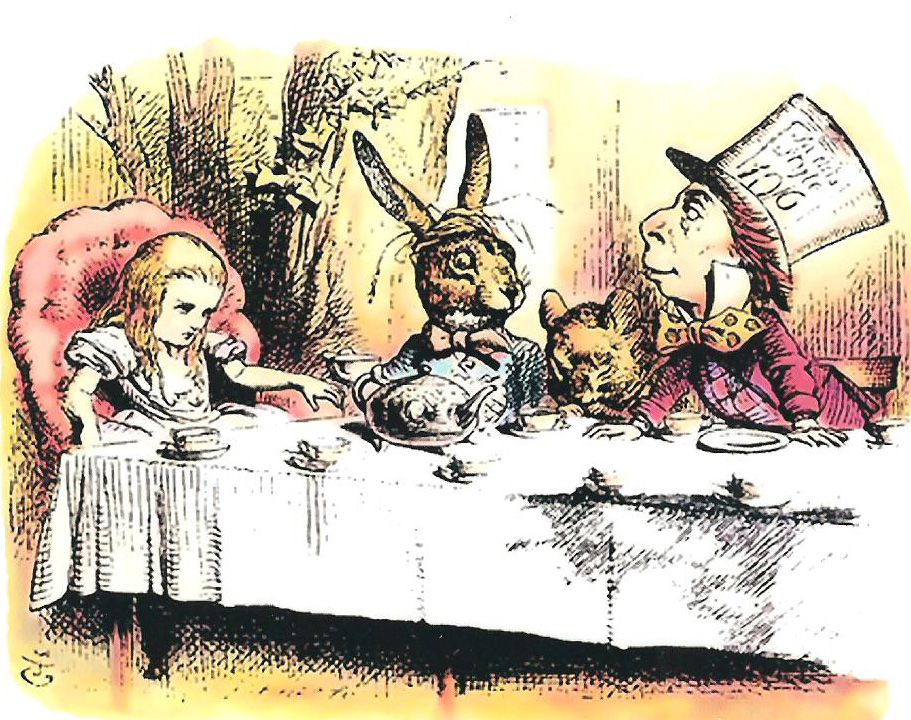
Alice Has a Pity Party

Mad-Hatter-Tea-Party

When friends compliment me for being patient and nurturing toward Ralph I have to laugh. Empathy for others easy, empathy for Ralph not so much.

Especially today. Maybe I can blame the bad cold I’ve come down with, but I feel like griping. I don’t blame you if you don’t feel like sharing my self-pity party, and if that’s the case, you might want to stop reading now.

I just spent the morning re-ordering his meds, which never arrived last week. I ordered refills weeks ago and have assumed they were on the way but when I went to feel his weekly box, I realized they still haven’t come and we are getting dangerously low. Evidently Ralph removed the post office’s post-it note without telling me I needed to pick up a package. The package got returned, we’re down to less than a week of some meds and I was on the phone with the mail order pharmacy working out how to get his meds for half an hour. In the old days, I would have yelled at Ralph for forgetting to tell me because he wasn’t paying attention, but how can I now, knowing it’s not his fault.

Then I re-organized the clothes in Ralph’s closet yet again. One of the more recent hints of slippage has been sartorial. He was never a snazzy dresser, but he was vain about his admittedly good looks. Now whatever is closest at hand is what he puts on. I no longer bother reminding him about the separation between work and dress clothes, but I do try to steer him in the right direction, mostly by having fewer choices visibly available.

Then I dug out a few Natty Lites from my secret hiding place and put them in the fridge for later this afternoon. Ralph more or less accepts this system for limiting his daily alcohol consumption although he’s remarkably able to find my hiding places, his memory and sense of direction still acute where beer and cigarettes are concerned.

This is all so trivial, and I know others’ problems concerning Alzheimer’s, not to mention poverty, hunger, war, are much worse. But I have noticed that managing these silly daily tasks with their subtle reminder of something amiss, something out of balance, sometimes drains more energy and patience  than dealing with Ralph himself. Or that after taking responsibility for the practical details of Ralph’s life, my patience for dealing with the man himself is compromised.

But as I said, I have a cold.

So I’m off to make myself tea and toast and pretend I have someone to take care of me for a little while.tea

A Benefit of Ralph’s Cognitive Impairment–My Strengthened Self?

men-wanted-bargains-1433910-639x454

Last week I posted information about a study concerning the impact of Alzheimer’s on women. Since then I have found myself thinking in a more deeply personal way about how I have been impacted, specifically in terms of my sense of identity as a woman.

My (even) more self-centered than usual thoughts are flowing after spending a weekend with an old college talking and eating non-stop (the eating important since the setting was New Orleans).

Jane and I explored the challenges that shaped us over the last thirty years and the directions in which we are currently evolving. We talked a lot about whom we have each become and why. It turns out that we have remained alike in many ways—our politics, our private and social ethics, our taste in food, even our TV preferences.

But there is a major dividing line: I have a husband and children. She doesn’t.

In college, despite high ambitions and avowed feminism, we shared a tendency to let men we loved take over our lives including those ambitions. (Ironically, the fact that we were at different times drawn to the same young man brought us closer as friends.)  In our twenties, we each married a charismatic if self-absorbed man with big ambitions of his own.

Then our life paths diverged.

Jane’s marriage lasted only a few years. After the divorce, she went on to have an extremely fulfilling life with an exciting career and plenty of important friendships and relationships. After Jane’s early marriage to a dominating man ended in divorce, she went on to have an extremely fulfilling life with an exciting career and plenty of important friendships and relationships. She has her regrets, but she has developed an amazingly strong individual identity, which includes confidence that she is a woman who can take care of herself. She is not certain that she could have become that woman within the confines of a marriage.

My marriage—to Ralph—has lasted and my primary identity became tied up in being a mother and a sometimes resentful wife struggling not to be overshadowed by Ralph’s powerful personality. I fought to forge my own identity, eventually publishing several books including my first novel.

But I never put my ambitions first and in our shared life, I usually let Ralph get his way in decision-making. I would rail against the decisions he made—like to move us to a farm or buy a certain car—but I always went along. And when one of Ralph’s decisions went bad, as they sometimes would, I could always think not my fault.

Jane did not have that luxury. She had to make every practical and metaphysical decision concerning her life on her own, and then she had to live with the consequences.

So now she is a woman used to making decisions for herself, used to the tension and the fear and the joy, and I am a woman learning to make those decision for myself and for Ralph.

Making decisions alone requires a mental muscle I never adequately developed and now have to exercise. Ralph no longer has any interest in making decisions. Along with memory loss, his mild cognitive impairment has caused a major personality change. He is the passive one who cheerfully, and without the resentment I used to feel or any questioning, goes along with whatever I say.

I am not downplaying the reality of Ralph’s cognitive impairment and its negative aspects. But learning to cope with Ralph’s condition has created a potential for growth for me as a woman. It is scary and intimidating to be the decider, also liberating. I am learning what Jane learned over the last thirty years: to be strong-willed, self-reliant, independent, and in charge of my own happiness.

18 Months Post Diagnosis of MCI–Where Are We in Memoryland?

rings

I just realized that I began blogging about Ralph and me in April of 2014. Is that only a year and a half ago? It feels much longer, as if Ralph and I have gone through years and years of changes in the last 18 months. At the same time it feels as if the two of us are stuck and not moving forward at all.

FEELS is the operative word. Feelings are subject. Feelings can’t be trusted.

A lot of things happened—deaths, weddings, children moving away, friendships evolving, business crises. The accumulation of events big and small that form our lives. But how much as really changed in terms of Ralph and me. Have we moved deeper into Memoryland.

To gain perspective I went back to my first post to compare and contrast the salient points:

RALPH’S DIAGNOSIS:

Then: He “does not yet have the disease called Alzheimer’s. He has the CONDITION called MCI.”

Now: Still true as of his last test results at the Emory Memory Center

WHAT HE REMEMBERS:

Then: Impersonal facts like those on Jeopardy, His Meds, His Daily Routine, How to Drive

Now: He watches Jeopardy but not so much. He still retains facts, but not quite as many. He still can take his meds from his weekly box. His daily routine looks about the same on the surface although his actual day has shrunk. It is hard for him to get moving before 10 am or stay up past 8 pm. And he does a lot more sitting

WHAT HE FORGETS:

Then: Who people are. Conversations. Memories, especially bad memories…

Now: Fewer conversations are retained. More people and also facts seem lost. Old memories too.

WHO HE IS:

Then: “Sweeter than he used to be; less aggressive; more patient; less easily bored (because he doesn’t remember the twenty minutes of waiting for the doctor once it’s over); more in the moment.

But also less ambitious; less energetic; less adventurous; more passive; more dependent…Passionate about his farm and his dog…able to fix anything with his hands…a voracious reader.”

Now: Here is where the changes start. His personality is if anything even sweeter, even less aggressive. He no longer has an interest in analyzing numbers, facts and human nature. He may still be able to fix things with his hands but he doesn’t have much interest. Changing a light bulb becomes a major occasion, not because he can’t but because “it is so much trouble.” There has been a shift. A subtle withdrawal from the world we share that cannot be measured by memory tests.

OUR RELATIONSHIP:

Then: Eighteen months ago, I wrote, “although I’ve been warned there’s no telling how long before MCI begins chipping more deeply into his identity, Ralph is still himself in the most important ways.”

Now: I don’t know if I can honestly make that statement today. According to tests and my own comparison, Ralph is still functioning adequately with my support, but I have more trouble recognizing the man I married. There is a vacancy, a growing disconnect, that I sense but can’t measure.

Perhaps the greater change is not in Ralph at all, but in me. The relief I felt at first when we finally received a clear diagnosis for Ralph’s cognitive changes has shifted to something between acceptance and resignation. The support he requires weighs heavier.

We get along well on a day-to-day basis We still laugh together, usually in the mornings when he is sharpest, but we have less and less serious conversation either about the world around us or about ourselves. Sometimes, in a burst of ebullience, he’ll declare how much he loves me. And I love him, but the love is different and not exactly ebullient.

18 months ago I was a spouse learning with my husband to deal with his cognitive condition. Now I am not sure how to describe our relationship. I often feel more parental than wifely. But saying so feels (that word FEEL again) inaccurate and unfair. Because whatever we have become to each other and whatever we are becoming together and individually changes every day.

2 ALZHEIMER’S QUESTIONS NO ONE CAN ANSWER

DOES HE KNOW?    IS HE HAPPY?

These are the two questions people ask more than any others once they learn that Ralph is suffering cognitive loss due to Alzheimer’s.

Both questions should be easy to answer:    YES or NO.      Yet I can’t answer either for sure.

1. DOES HE KNOW?

What Ralph knows and what he acknowledges may or may not be the same thing.

He’ll be catching up with an old friend on the phone and I’ll hear him say, “I have a memory problem,” as if it’s just another inconvenience of aging like someone else’s arthritis.

I’ll show my annoyance about something he forgot to do, like feed the dog, and he’ll rightfully if self-righteously chastise me, “You know I have a memory problem.” Of course I immediately backtrack. (Not easy for an inveterate  nag).

But if the word Alzheimer’s comes up in general conversation, or more often in the media, he chooses to disassociate himself. There’s a TV commercial for Namenda that particularly bothers him because he  takes Namenda. He does not want to identify with the sweet old man on the screen. “I don’t have Alzheimer’s,” he’ll announce. “The doctor said I don’t have Alzheimer’s.”

Often I just nod. After all, his most recent cognitive tests show he is holding onto the smudged borderline between Alzheimer’s and Mild Cognitive Impairment. But if I slip and remind him, “The doctor explained what it means that you have the plaque build up associated with Alzheimer’s,” he’ll go very quiet.

And if I ask him pointblank how he thinks he’s doing, whether he senses any changes in his cognitive abilities (changes I do sense but don’t bring up), he says no, he’s fine. If I mention  a specific cognitive lapse, he denies it.

I understand:   He wants to be in control.

2.  IS HE HAPPY?

 He SEEMS to be, at least as happy as he’s ever been:

He laughs more. He’s less impatient. He loves his dogs. He loves his nutty buddy ice cream cones for dessert after dinner, which he also usually loves (without the critiques of my cooking he used to make). He loves his cigarettes and his lite beer. He loves sitting on the porch. He loves his farm. He says he loves fishing although he doesn’t often make the effort to fish anymore. He loves me, as he’s told me more times in the last six months than he ever did in the previous 40 years we’ve been a couple.

But what he’s thinking and feeling inside I don’t know. For a man who loved to talk politics and philosophy all night, he’s gone awfully silent.

And really, if you ask whether he was particularly happy before his memory began slipping, the answer would also be I don’t know. He’s always been moody, though less so now. And like many men of his generation, he’s never been big on revealing or analyzing himself.

Still, I can’t help wondering if boredom is the reason he sleeps so much now that he’s not interested in what’s going on in the world–or if not boredom, a desire to escape from thinking about his situation. He doesn’t voice the fears he must have about his future, and I don’t push him (well, a little) or ask point-blank if he is happy. I don’t want him to ask me back.

I am not sure how I would answer…

RALPH LOVES TO TALK BUT… PHONE COMMUNICATION WITH THE KIDS

PHONE

The big issues connected to Alzheimer’s and dementia are almost too hard for me to grasp at this point despite the never-ending stream of factual information pouring off the internet and in the media. It is the small moments that capture what it means to live with memory loss.  For instance:

When I get home in a grumpy mood after driving my daughter through rush hour traffic to catch a plane, Ralph is in his usual spot, the front porch rocking chair, with cell phone to his ear. I head inside without stopping to ask whom he’s talking to.

After all, Ralph has his regulars: one loyal friend who checks in weekly, his sister, and the oldest of our three kids.

He talks to his sister almost every day. Both have a lot of time on their hands. Often they can talk for over an hour. Whenever I ask what they talk about, Ralph shrugs. “Small talk.”

He talks to our oldest son almost every day. If Ralph is laughing, but again, I assume it’s Josh, but again when I ask what they’ve been talking about, Ralph says “Small Talk.”

Our much younger two kids love their dad but they are of the text not talk generation. Their phone conversation with their dad are fewer and farther between.

So I was surprised when Ralph came inside and said he’d been talking to our younger son Jacob.

Surprised and pleased until Ralph added, “I called him but he didn’t seem to want to talk. It was a short conversation. I don’t think he likes me. Was I a bad father?”

This is no excuse, but I was hot and tired when I answered with the truth. “Not exactly but not always very nice. You weren’t very supportive.”

Ralph gave me a heartbreaking hangdog smile. “I wish you hadn’t told me.”

“But you asked.” (I know, I know, I could kick myself.)

“You should have lied.”

By then I was already desperately texting with Jacob: Dad said he called but you didn’t seem to want to talk. / Really??? It didn’t seem that way to me but ok / I made it worse because I said he was kind of mean / LOL

Jacob immediately texted Ralph saying he hoped he didn’t sound “out of it” but he’d just  come in after riding his new bike home from work. Evidently they had talked at length about the bike during their not hour-long but not short conversation.

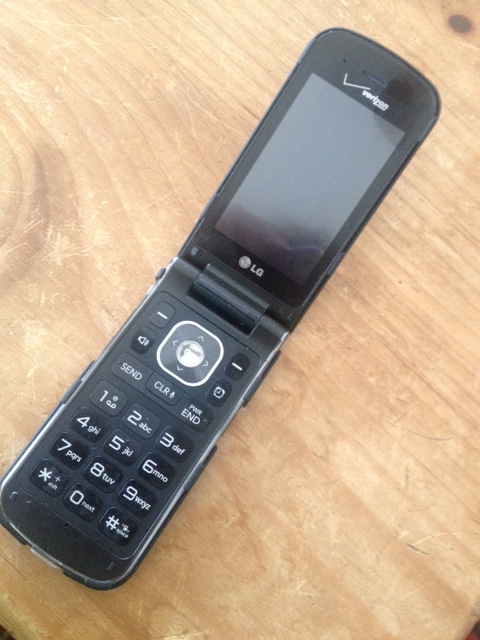
Of course, then I had to figure out to get Ralph to find the text since he never checks for texts on his fliptop unsmart phone.

I waited about twenty minutes, said my phone was dead, asked him to check his because I was expecting a message from our daughter to let us know if she made her flight. He said he didn’t know how. We looked together.

“No message from her, but look there’s one from Jacob,” I said casually and read it to him out loud.

“Why would he send that?”

“I don’t know. Didn’t you talk today.”

“Maybe so. I don’t remember. But this was nice of him.”

Guilt, angst, manipulation, all for nothing maybe. Or maybe not. Ralph went to bed smiling.

Ralph Makes a Liar Out Of Me–By Reading

Well Ralph has made a liar out of me (probably not the first time, and no doubt not the last).

In responding to Mary Smith’s comment on last week’s post, I wrote that Ralph doesn’t read anymore. And at the time it was true. He hasn’t read a whole book for several months. Similarly, these days the long newspaper or magazine articles he used to relish don’t hold Ralph’s interest because they have too many facts to keep straight. The kind of serious movies we used to see together are often too convoluted for him to sort and remember now; every one we have seen in the last six months has been “too long and confusing.”

He will still ask almost daily for a book recommendation, put the book by his bedside table, but then let it sit there unopened on the growing pile. Yesterday he asked me if he’d already read some 400-page tome on top of the pile, a non-fiction history I knew he’d begun many times. Instead of going through the motions of pretending that monster read was viable, I had a brainstorm and suggested a very short novella, Ashes in My Mouth Sand in My Shoes by Per Petterson, instead. Ralph sat down and finished it in one reading. A young boy’s narration of his relationship with his father, written with childlike clarity, Ashes turns out to be the perfect book for a man with a short attention span to read (or have read to). Actually, it is a lovely book for anyone to read. Petterson writes about children and about men with startling sensitivity. His other books tend to be quite dark (if wonderful), but Ashes is more elegiac and bittersweet. Ralph obviously loved it.

I have been struggling for a while with the dilemma of how to engage Ralph’s interest and exercise his brain, not with any illusions of curing him but because he still likes to be engaged and the old ways don’t work.

And short stories are, well, short. Plus the emotions and psychology they explore require exactly the kind of intuitive response Ralph remains adept at giving. In fact, if anything, he is more intuitive than he has ever been. So after he finished the Petterson, I gave him Tenth of December by George Saunders. Not exactly light fiction and very serious, but as I said, short. And if he reads the same story over twice, who cares. What’s more, since they are short we can both read them and discuss.

I am pretty excited to discover I was wrong to think Ralph was beyond reading. For now, the choices have merely changed, well changed and narrowed….I have no illusions that the narrowing won’t continue, but  enjoy what we can while we can is my new motto.

OOPS

So I was about to write about a little snafu caused by Ralph’s memory lapse the other day but then I had my own cognitive issue.

We received a less than friendly email from a neighbor who has been complaining about various issues. In the past when he has made requests we have always complied. This time he was mad because a dumpster on our rental property was not emptied on New Years Day. The email was sent to our business email address and to Michael, the guy who manages the property since we “retired”. In the past we have always bent over backwards to make him happy—hiring people to police the grounds, adding an extra dumpster pick-up day, acquiescing to his zoning requests to put in a swimming pool and build a wall. This time I was admittedly annoyed at the snotty tone of his letter and emailed Michael that I now wished we hadn’t offered so much in the past. Unfortunately I was emailing from my phone, was slightly distracted, and hit “reply all” by mistake.

The neighbor was not amused.

And I can’t blame my screw up on cognitive impairment. Wait, maybe I can.

As followers may have noticed I haven’t written here for a few weeks. Since Ralph was  functioning more or less as usual, I took a short hiatus, taking care of the essentials but not thinking quite so much about our situation–a small case of burnout.  And I am not alone.  Supposedly caregivers of Alzheimer’s spouses have a higher rate of anxiety that could impair cognition. http://www.alz.org/care/alzheimers-dementia-caregiver-stress-burnout.asp

The hiatus is over and I am feeling calmer about my life, but don’t tell anyone. MCI and Early Alzheimer’s have given Ralph his built-in excuse for life’s big and little screw ups . I need my own.