Tag Archives: Alzheimer’s symptoms

The Business of Remembering…A Sense of Time and Identity

The business of remembering what you did that day, or what you might want to do the next, I think, is essential for creating an overview of your life – that overview is what fuels plan-making and that ties in deeply with identity.”
shutterstock_155952698.jpg

In case you missed it, this comment was made about my last post by  Jabberwalk, who writes with great insight and honesty at her own site Caregiving in the Forest.I can’t stop mulling over the implications.

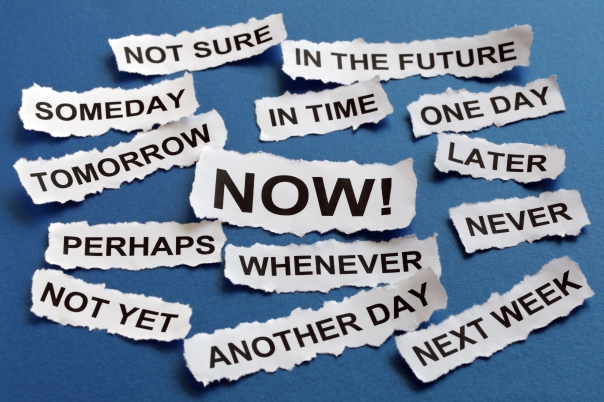
Time is the trickiest part of life for Ralph. Almost the first thing he asks each morning is what day of the week it is. Sometimes he remembers what he did or parts of what he did yesterday, sometimes he doesn’t. Often he misremembers. He doesn’t like the confusion his lousy short-term memory breeds, but he lives with it by asking for a rehash over and over hoping for clarity that seldom comes.

We all fear the loss of short-term memory, but the problem of future memory is in some ways more troubling. When Ralph looks forward to what comes next, what he seems to see is an anxiety-producing obstacle course. Since he can’t hold on to the facts of place and time, he becomes increasingly anxious each time he asks again Where? but mostly When? The issue for me becomes how much information does he need, how much is a burden.

Not only do I make the scheduling decisions, but I also end up structuring what he thinks about that schedule, and therefore what he thinks about period. In other words, I am taking away or at least shrinking his overview.

His sense of identity has certainly shrunk. Yes, he is an increasingly passionate dog lover because dogs demand so little and remember on their own. And he remains a husband, not an equal partner perhaps but genuinely grateful to his wife for filling in the blanks. He is still a father too, although his memory of the kids’ childhoods is sketchy and he keeps up less and less with their adult lives because he finds tracking the details so difficult. He was glad to let go of his professional identity and hand me that responsibility early on. While he can be charming in social encounters, his interest in friendship and being a friend is limited by his difficulty remembering who people are, their names of course but more importantly, their connection to him. While still capable of moments of remarkable perception, he is no longer interested in being an intellectual or armchair philosopher because it requires remembering a train of thought.

I remember lots of trains of thought. I carry around layers of overview based on the different roles I play—wife, writer, friend, woman, businessperson, spiritual seeker, reader, political thinker, mother (Note that caregiver is not on this quickly written list—a Freudian slip I just noticed myself).

These roles operate within and are influenced by the various ways I frame my time. There is the constant background hum of long-term, generalized plans still under construction (i.e. How much longer until we need to downsize? What are my options if/when needs professional care?). More immediately, there is the weekly erasable-board calendar that Ralph and I live by day-to-day; there is the monthly wall calendar as well as the one on my phone. And there is the semi-conscious minute-by-minute and hourly tracking most of us fold into our routine (unless we are on the Alzheimer’s continuum and struggle to remember whether we ate lunch already) without much conscious thought.

But what has always been almost second nature, like making coffee as soon as I get up in the morning, is getting more difficult. Lately I have trouble both keeping my plans organized and keeping a hold on my sense of self within those plans, largely because of the important role-identity I just caught myself forgetting to include above. Caregiver, leads to another identity: AliceasRalph.

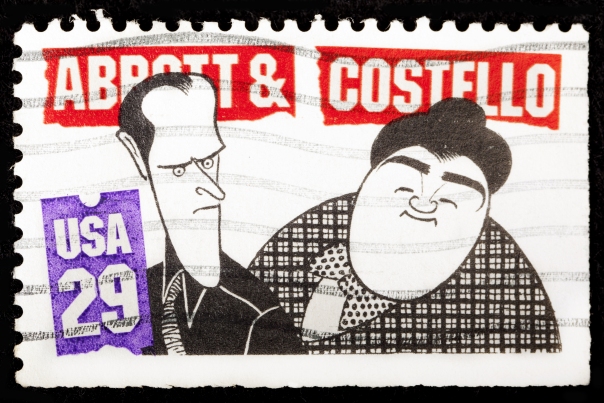
Keeping Ralph’s life organized and reminding him what he is doing on a given day means I also remind him why and how he feels, which means I make an effort to get into his head to understand his mindset. Thus is born AliceasRalph, who often ends up as confused as he is by his confusion about whatever I am trying to explain. Our weirdly opaque discussions can sound like the old WHO’S ON FIRST comedy routine.

Ralph’s overview of his life, if not lost entirely, is definitely tangled. And because I am both Alice and AliceasRalph, my overview is pretty tangled too. Not hopelessly, but moving forward requires vigilance as I ceaselessly work to untangle the delicate filaments without breaking them.
shutterstock_147393377

What Is Normal Anyway?

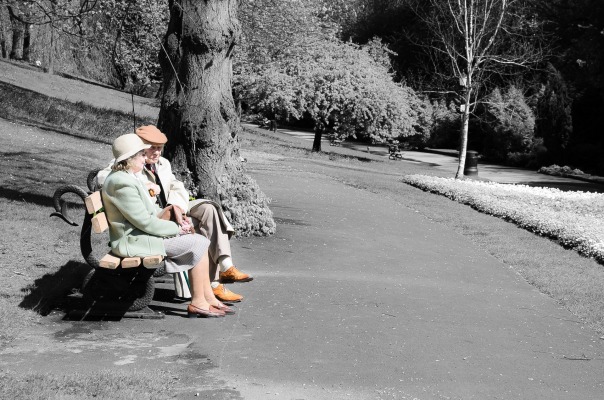
people_in_the_park_204264 Is this the couple  Ralph and I are becoming? Jaunty hats and sensible shoes? Would it be so bad if we were them? Don’t they  look  happy and normal? But what is normal?

As I look at the life Ralph and I share now, I can’t help wondering.

When he was first diagnosed with relatively advanced Mild Cognitive Impairment, Ralph was in his mid-sixties and considered young to be jumping on the Alzheimer’s escalator. Now he is approaching 70 and those  symptoms—fogginess, lack of energy, loss of short-term memory, disengagement—that seemed so out of keeping with our peers a few years ago fall more comfortably into the gray area called “the aging process.”

And after all aging  is normal and even desirable  (the alternative being death) although it hits us each differently. For example, I called Ralph’s oldest friend the other day; the two have drifted out of touch over the years but Ralph still talks affectionately about Jim and I thought reconnecting  and reminiscing would be nice for them both to do while Ralph still can. Jim was excited at the prospect of re-connecting with Ralph but we couldn’t actually talk until  he put in his special hearing aid for phone use.

In that moment it occurred to me as it has before that while Ralph remains on his plateau of not-quite-Alzheimer’s-yet, his issues are not radically different from other men his age, at least according to what I hear from the women my age who live with them. So many of my friends complain that their husbands are slowing down faster than they are, that they no longer want to travel, that they’re becoming stay-at-homes, that they are more passive than they used to be, that they need to be cared for, that they require a lot of patience.

And we women have our own issues, or at least I do. The sleep issue—never more than six hours and often less, with the resulting sense of dull tiredness and desire for an afternoon nap. A nap for God’s sake! Ugh. The driving issue—is my driving getting worse or am I just more nervous? The concentration issue—much harder to turn off the wifi and buckle down (although maybe this problem will go away after election day). And of course the fashion issue—not that I ever dressed fashionably or learned to use make up but nowI either look as if I’m trying too hard or not hard enough.

The thing is, I still do feel younger, still want to fight aging, while Ralph has embraced it. Our day-to-day life has fallen into a frankly pretty comfortable pattern set largely by Ralph’s needs and wants. The pattern scares me because I find it enticingly easy to fill so much time dealing with minutia concerning managing Ralph’s care, our finances and our household, especially since my social life has actually expanded as Ralph’s has contracted. If this is this my new normal, it is not all bad? But I worry, where is my zest for the intellectual and creative ambitions that have always defined me before?

In a weird way I am almost heartened personally by the current election season in which two of my peers slug it out with vigorous, and in one case even brutal, energy (although I’m not saying their “normal” is the one I want). I want to believe I can still find that kind of passion and energy in myself. But maybe not, and maybe that’s okay.

Sorting out what is normal under my circumstances, or what is normal under any individual’s individual circumstances, is not easy, but it is where I find myself.

(PS. Last nightI asked Ralph, as I always do, if he’d talked to anyone during the day. He said no. I checked his phone. There was Jim’s number at the top of received calls; evidently they’d talked for over half an hour.)

Ralph “Passes” the Test to Participate in Alzheimer’s Study

testing.jpg

The research nurse at Emory’s Brain Center called a week ago asking if we—Ralph and I because caregivers play an active role—would be interested in participating in a research study.  The nurse had already looked at Ralph’s chart and said she thought he’d be a good fit.

The study is  being conducted by the pharmaceutical company Merck  on a possible treatment to slow the progression of Alzheimer’s. As the Merck brochure says, “This study is designed to test the idea that inhibiting a specific enzyme, BACE, may slow or stop the progression of Alzheimer’s disease. The drug in this study, MK-8931, is a BACE inhibitor, which means it helps stop the BACE enzyme from producing amyloid beta peptides. Amyloid plaque deposits in the brain may be the underlying cause of Alzheimer’s disease. By inhibiting the actions of the BACE enzyme, it may in turn help stop the formation of those amyloid plaque deposits.”

In other words, the study hopes to find a way to slow down the build up of the plaque that is assumed to cause Alzheimer’s and that is evident in Ralph’s brain according to the spinal tap his doctor administered several years ago.

I glanced at Ralph, who was on the couch having his afternoon nap, and said yes, I thought we might like to participate. I was actually quite excited. In the past Ralph has not qualified for studies and drug trials like this because of his MRI problem—the bb pellet that has been lodged in his tongue since a shooting accident when he was eight-years-old not only uncomfortably heats up during the procedure but distorts results—but this particular study has dropped the MRI requirement.

The nurse immediately emailed the study’s descriptions and consent forms, which I read and explained to Ralph. And explained again.

“I hate taking pills.”/“You won’t even notice the extra pill.”

“How often will I have to go see the doctor?”/“Every other month.”

“What if I’m stuck with the placebo? It’ll be a waste of time?”/“But the study will give you the real pill afterwards, and in any case, the study will benefit others, like your kids who are at genetic risk.”

“Ok, it sounds good. But I hate taking pills.” The familiar loop repeated itself over and over, and each time he ended up agreeing to participate, if with tepid enthusiasm.

Three days later we were at Emory. (Evidently the study, which has already been going for a year or two, needed a few extra last-minute entries and the deadline got pushed up so we were a rush job.)

Ralph took two memory/cognitive tests which have qualified him although “passing the test” is not the term I’d use exactly, at least not for the second test in which the cut off number had to do with having too much memory. Ralph evidently “passed” with flying colors because his memory score was very low. I have to say when the nurse whispered the news to me, my heart sank a little.

Now we are waiting for Merck to look at the scores before scheduling some physical tests. If Ralph makes it through through those, he will begin taking the extra pill with his Namenda and Donepezil daily. There is a one-third chance or receiving a placebo, a one-third chance of receiving a lowish dosage of the medication, and a one-third chance of receiving a higher dosage. I will be expected to keep track of his progress in some form that has not yet been clarified—I warned the research nurse that I may be travelling some in January after my daughter gives birth, but she said that would not be a problem.

Once Ralph starts the pill, we will meet every two months with medical personnel, including his neurologist, a dermatologist and the research nurse, for the next two years. When the two years are up, if he’s been taking a placebo, Ralph will then receive the higher dosage of the actual medication; otherwise he will continue on the dosage he started with.

I see no downside (except, if I am honest, the extra effort required on my part) and plenty of pluses. Because we are entering the study late, there is plenty of knowledge about side effects—minor and rare. The frequent visits to Emory are a great excuse to get Ralph out of the house and into the world. Plus he will be receiving more detailed health check ups on a more frequent basis. We will no doubt have a better sense of where he is on the continuum than we do now.

And, although he says he doesn’t care, the idea of doing something useful for others, of being part of a cause larger than himself, will give him a sense of purpose; even at Emory the other day I saw the shift from anxiety (which may have caused his low memory score) to energetic good cheer as he interacted with staff.

And if the medication makes a noticeable difference in Ralph’s condition, well that would be great too. Fingers crossed.