Category Archives: Uncategorized

Alzheimer’s and Politics: Ralph’s Non-Vote

IMG_0157.JPG


Well I just got back from voting. Super Tuesday. A big deal.

I live in a voting district so politically lopsided that only candidates from one party (and not mine) run for national and state office. Usually my vote is so irrelevant that I have been known to write in “Anyone But…” on more than one occasion. So, as depressing as this political season has been, I felt a little twinge of excitement knowing that for a change my vote will actually matter.

I asked Ralph if he’d like to vote. After all, he listens to Public Radio every morning and watches the news every night. At various times he has declared Candidate X is definitely his candidate, or sometimes Candidate Y until I remind him he is for Candidate X (whom I am backing). He has laughed at stupid campaign ads and made astute comments about various candidates’ stupid statements. He has always voted.

Ralph said no, he didn’t feel like voting today. Then he asked what the issue was. I said the presidential primary. He still wasn’t interested.

His answer depressed me incredibly. In so many ways politics has defined our relationship from the start and now it is defining us in a different way.

When we met in the early 1970s, as the Nixon presidency and the Vietnam War were both unraveling, our romance centered on our shared political values. Or rather me sharing Ralph’s. We worked in the alternative press, and Ralph was passionate about his views. I remember sitting beside him on a couch as he went on and on about some theory or other while all I wanted was for him to shut up and kiss me.

Cut to the 1980s. Married with kids, and arguing a lot—a lot!!—mostly about decision-making; I found him controlling and he found me unsupportive. What we did not argue about was politics. We were both part of the small minority that voted for John Anderson in 1980 (although I had to look on the Internet just now to remember his name) and we both thought Reagan was not all there (little did we know, ironically enough). Our political agreement was important; I told myself that I could never be married to someone if I didn’t share his political beliefs

In the 1990s came the big shift. We moved to the country (another big argument that lasted for years) and midway through Clinton’s second term Ralph began to call himself a libertarian. “I’m not a Republican. I am Libertarian,” became his mantra. He was as passionate as a Libertarian as he had been when he was a socialist. I did not become a Libertarian, however, and was no longer susceptible to being swayed by any man.

In the first year of the new century, politics turned out to be a wonderful vehicle for arguments. We couldn’t watch the news together without fireworks, and the family dinner table became the set for great shouting matches, as our kids will attest. We railed against each other about taxes and the Mideast (although we still agreed on most social issues). Of course, under the political veneer our arguments were often about unspoken personal grudges and resentments we each nursed.

And now here we are in the most heated political atmosphere imaginable, and Ralph has gone lukewarm. He wants to be interested I think because he asks me frequently, “Who’s running again?” He cannot keep any of the candidates straight, although that may have more to do their deficiencies than with any cognitive deficiency on Ralph’s part.

The thing is, he would have voted today for whomever I suggested. While he listens to the news nonstop, very little of it sticks with him. This is not only a matter of memory. In part, his attention is turned more inward, but also he has a certainly mental hesitancy as if he doesn’t trust his own instincts. As a result I can easily convince him to agree with me, not only about the candidates, but also about any analysis of world events.

He now listens to me rail the way I used to listen when he railed. I admit I don’t mind being having an enthralled audience of one. I like being agreed with. I like being the one spouting righteous certainties. But this strange reversal is more bitter than sweet.
Driving and Alzheimer’s

driving_268131086


Memo to myself when I look back in years hence:

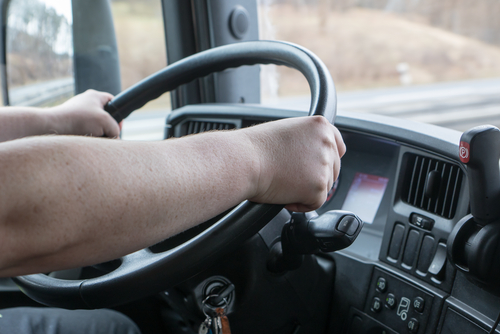
So six months ago our PA Stephanie asked Ralph how much driving he did alone. And he told her: the convenience store five minutes down the road; the Spanish grocery ten minutes away where our handyman likes Ralph to drive him to cash his checks; and Ralph’s therapist in Atlanta.

Since his diagnosis that weekly trip to the therapist has been Ralph’s big expression of independence and competence. He has his route down pat. He stops at the post office and checks to check our box; he takes a load of garbage to the dumpster at our old office; he picks up lunch at Burger King; he visits his therapist; he drives home.

Stephanie took notes, then warned us both to keep an eye on Ralph’s driving. Not so much his skill set but his sense of direction. She explained that a new detour can really be confusing for a driver with cognitive impairment and that the anxiety can made the driver too confused to find his way back on track.

When she suggested I start driving him to Atlanta, at least occasionally to make sure it was safe, Ralph and I immediately took umbrage…Ralph because driving is part of his sense of his identity as a competent man, me because I didn’t look forward to giving up a whole day every week to drive him back and forth. But the next week I made some excuse to ride with him into town—he was not about to accept that I needed to drive him—to make sure I was not just being selfish. As I reported to Stephanie on our next visit, Ralph seemed fine. In fact, he seemed to be a better driver, more cautious and careful.

Jump ahead to this past weekend. We drove together to the small Florida fishing town where Ralph was meeting his long-time fishing buddy.

Although I wasn’t comfortable enough with him driving five and half hours that I didn’t come along, I was pretty comfortable with him as driver since Ralph knows the way like the back of his hand. So on the way down I was happily drinking my coffee and relaxing beside him as passenger. Then I looked down to read a text, and when I looked up I realized Ralph had missed the turn. A major turn from one big highway to the next. A well marked turn that is hard to miss. We went an exit or two and turned around. I was a little tense and probably showed it more than I should have. Ralph was more than a little tense, but as I told him repeatedly in the next few hours, these things happen.

We got to Florida. Ralph calmed down and actually enjoyed himself more than either of us expected, thanks to a fishing buddy who is amazingly understanding about Ralph’s conversational loops.

Today we drove home. Ralph insisted that he wanted to drive. I was in the passenger but on alert when my phone rang. I looked down to find it, and when I looked up Ralph had missed the turn we needed to take. The turn he has taken hundreds of times. I stayed calmer this time, brushed the mistake off, said we didn’t need to turn back, that this way might actually be a short cut. But he was truly rattled. For the rest of the trip we had to discuss road numbers and I had to reassure him we were on the correct road.

Twice in four days may be a sign. Next week, I am driving with Ralph to Atlanta.

Mama Bear Beats Out Wife or Caregiver This Week

mama bea

Last week, I wrote about my role as wife interacting with my role as caregiver. Since then I have been reminded that my role as mother, even to my adult children, still takes precedence.

When my kids were little, Ralph used to complain, as young fathers evidently often do, that I prioritized the kids ahead of our relationship. He was right, I definitely did. I was passionately, perhaps obsessively in love with my son and my daughter. And for better or worse, I put them first. I was no Ayelet Waldman, but then Ralph was no Michael Chabon.

Then the kids grew up, damn them, and went on their far-flung ways. (What was I thinking raising them to be adventurous and independent?) Ralph and I went into marriage counseling where we finally learned to get along. Like so many empty nesters we entered a kind of second honeymoon, growing closer, rekindling genuine affection while also, at least on my part, developing my own creative and social life. After Ralph’s MCI-Early Alzheimer’s diagnosis, the dynamic between us changed again. For the last few years, as I’ve explained probably too many times, I have been in the wife/caregiver conundrum, trying to maintain my interests while needing to focus more and more energy on Ralph.

Well, Ralph is not my focus today. Tomorrow I leave to stay with my daughter while she has a minor medical procedure. She didn’t want me there at first but needs me to babysit my granddaughter. Of course as soon as she asked, I dropped everything. I have prepared meals and a friend has offered to visit Ralph but otherwise, until I sat down just now to close the computer down, I was not even thinking about the fact that I was leaving him on his own.

And Ralph is fine about that. He wants me with our daughter as much as I want to be there, but he doesn’t want to be there himself. Not that he doesn’t care. He does, his high anxiety showing as a spike in forgetfulness and napping as well as an intense desire to stay in his comfort zone at home.

I know he’ll be fine, or okay at least.

But really my head and heart are not focused on him. For the last five days, even though the medical procedure is minor, I have reverted back to Mama Bear mode. For the moment at least Ralph is again a lesser priority in my life.

ON LABELS, ROLES AND MARRIAGE WITH ALZHEIMER’S

Labels_610_300_s_c1_center_center

There has been quite a bit of discussion lately on the blogosphere about how to label or not label people with dementia, specifically whether the word “sufferer” is verboten. I am not yet brave enough to discuss the issue in detail [although basically I’m all for not labeling, but I’m also for being free to label myself any way I want without feeling as if I’ve broken some rule], but it’s got me thinking a lot about labels in general. Not so much Ralph’s as my own.

And maybe LABEL is the wrong word. Maybe I mean ROLE.

Over the last couple of years, I have grown to think of myself more and more as Ralph’s “caregiver” and have heard myself talk (pontificate?) about what being a “Caretaker” entails. It’s such an easy catchall phrase. But now I am beginning to rethink just how I should describe myself.

During the last ten years of my mother’s life I was the primary “family caretaker” although there were always professional caretakers on hand to do the often literally dirty work. She was in my house and I was the one making decisions about her care. I was the one writing checks to those care professionals out of our joint account. I was the one informing my siblings when I sensed a problem. (I was also the one complaining about my siblings and being complained about—butt-calls and miss-directed emails kept us all more informed than we’d like on both counts.) I was the one sitting in the emergency room at least once a month toward the end.

She became less and less my mother than my responsibility, my duty.  Ironically, that was when my patience increased. The unresolved conflicts between us became irrelevant, dissolving like the thread doctors use to stitch up torn skin. At some point I stopped feeling like a daughter.

But as fraught as the mother-daughter relationship can be, the husband-wife relationship  is fraught in a whole different way–especially in a marriage with a man whose mental world is shrinking while mine is not.

Am I more wife or caregiver? As much as my marriage and relationship with Ralph have changed, despite my new sense of being the decider, I am not sure which way to answer that question.

Because he still annoys me the way only a husband can. The other day he was repeating one of his boastful but charming stories for the third or fourth time in half an hour. That immediate repetition I didn’t mind—it’s the Alzheimer’s speaking—but I have probably heard that story over a hundred times in our life together, since long before any memory loss, and frankly I’m sick of it.

And because I still use that bitchy tone I have always reserved especially for him on occasions of mild to extreme annoyance. Although the issues are smaller these days than in the past, I’ve noticed that my annoyance can be just as extreme. What’s changed is that Ralph doesn’t shout at me or storm out the way he used to. Instead with earnest sincerity, he asks me not to use that tone because it makes him feel bad. And then I have a complicated wifely reaction of guilt and resentment, based on our history and all the times we made each other feel bad.

On the other hand, I still feel the need to get his opinion and advice, on business decisions, on family matters, on what blouse to wear. Of course Ralph used to be extremely opinionated, always ready to give advice whether I was ready to receive it or not. Now he is easily swayed by what I think and really has no opinion on most matters, political, social, or sartorial.

So, yes, Ralph’s reactions to daily life and to me have changed since his diagnosis of Mild Cognitive Impairment/Early Alzheimer’s. But I am not thinking about  Ralph right now, but about me, however selfish that sounds. I am worrying how I may be changing.

I have that luxury because Ralph’s mental state is on a plateau; his memory and other symptoms have held steady for the last year. Therefore our marriage is also on a plateau, part purgatory and part second honeymoon, as we watch for signs of the deterioration everyone agrees will be coming sooner or later.

Meanwhile my emotions regarding Ralph, while tempered by my awareness of his diagnosis and prognosis, are pretty much the same as they have been since practically the day we met: a crazy quilt of guilt, contentment, resentment, protectiveness, impatience, loyalty, recalcitrance, affection, annoyance, love and occasional hate.

And my self-definition—creative independent woman, passive helpmate, head of household, housewife, caregiver, care giving wife, wife who cares for, wife who wants to escape to Tahiti—remains constantly in flux. I am the woman I’ve always been, but I’m someone else as well. That caregiver word is there, stuck in the middle, not yet in capital letters.

IMG_0130(This crazy quilt belonged to my grandmother. Note the centennial snippet.)

A Sunday Snapshot

Unknown

It is important to remember today. Not because anything particular happened, but because nothing particular happened.

We woke and drank coffee. Then while I worked in my office, Ralph read. For a while he had stopped reading, and I assumed books, like movies, had become too hard for him to follow. But I seem to have been wrong. Today he picked up Leonardo’s Brain, by Leonard Shlain, about Da Vinci’s genius–not exactly a light romp or what I would suggest to a reader who has trouble remembering a joke by the time he hears the punch line. Ralph is finding the book “fascinating”.

We had lunch and he read some more while I walked with a friend. Now he has gone for a “walk” with the dogs—they walk while he drives beside them in the truck. Soon we’ll have dinner and watch Sunday television.

So, a normal Sunday. Except Ralph’s conversation is sharper today, his attention more focused.

I know better than to believe that Ralph is suddenly “ getting better.” But it feels important to appreciate this moment of respite: A reason to rejoice that while the thread/threat of memory loss has woven itself into the fabric of our lives, it has not yet pulled the warp and woof askew.

The Energizer Bunny Becomes Sergeant Bilko


When Ralph first received his diagnosis two years ago, memory was the big issue. Short term memory mostly, but also memory of past events and people. In reaction, I became a memory fiend for every factoid, date and name I could squeeze into my brain.

And since Ralph exhibited a new tiredness and a general decrease in energy, I became Ms. Energizer Bunny, joining organizations, making a bigger effort to connect with old friends and even make new ones, beginning projects and setting new goals for my writing.

But lately, not so much.images

When I was in my thirties my sister lovingly began to call me Sarge because I was over-organized and maybe a little bossy. Well, now I’m more like Sergeant Bilko, the inept TV character from the 1950s. I forget to sign checks, I lose my airplane ticket. Two nights ago I dragged Ralph to a friend’s house for dinner only to discover I had the nights mixed up.

I am finding it more difficult to rev myself up. I can get chores accomplished but to sit and think creatively—a deep sigh welled up out of my chest just typing those words.

We have been on the MCI/Early Alzheimer’s plateau for a while—and I am not complaining; I hope we stay here indefinitely since once we leave the plateau, the fall will be in one direction, down—but the adrenalin rush of discovering we have Alzheimer’s has worn off.

Oops, did I just write, “we have Alzheimer’s”? It’s a Freudian slip that makes sense. The reality is that the spouse of someone with Alzheimer’s is affected, not only by becoming a caregiver but also in deeper ways as a human being. The intimacy of a marriage, even a marriage with lots of freedom and independence and especially a long marriage, entwines the partners’ identities. Profound changes in one person mean profound changes in the other.

And there are few changes more profound than those caused by Alzheimer’s

Ralph’s “Best Christmas Ever”


IMG_0106

I was frankly not exactly looking forward to our celebration this year. Too many people, too much cooking and cleaning, too much money on too many gifts. Too many things to go wrong.

I could tell you all the things that in fact did go wrong, like the Christmas tree lights that stopped working, or the sibling squabbles that erupted (mine, not my kids), or my miscalculations on how many we could fit around the makeshift table which left us one seat short and everyone else scrunched uncomfortably together. Or the lost Kindle that probably ended up in a bag of garbage. Or the overabundance of leftover cookies and Trifle that have led to a horrifying number on my scale this morning.

IMG_0107

But really, the only one who suffered much this Christmas was Mr. Trump, whose face we smashed during Piñata Scrabble. He was filled with Scrabble letters and candies. The kids present attacked the piñata and then two teams of adults scrambled—and that is a euphemism for more warlike behavior; there was a scary moment when we had to scoop a three-year-old out of the melee—for the letters before each team competed for the most points through creating a crossword of words. This was serious competition that included a re-count before the captain of the winning team received her prize, a light up necklace.

Ralph watched Piñata Scrabble from the sidelines, but he participated fully in all the rest of the festivities. All three of his kids were home together for an extended period for the first time in years and he basked in their attention. He loved the store-bought tree. He loved the cookies. He loved our big Christmas Eve meal with the funny hats and jokes. He loved his stocking of gifts and the poster his granddaughter gave him. He loved sitting on our porch in the unseasonably warm weather, not alone for a change but surrounded by family and friends telling stories until three in the morning!

“Best Christmas Ever” he says, and says again.

The highpoint came about ten pm on Christmas Eve. I was washing dishes (of course) when I realized what was going on out on the porch. The music had begun.

Ralph’s oldest son, now a professional bagpiper and sitar player, was playing guitar duets with Ralph while everyone else sang along, Dylan tunes in the family tradition. Then it was just Ralph while the rest of us watched and listened under the flickering porch light. It has been years since Ralph last picked up his guitar, but there he was riffing and improvising, playing his heart out. All our hearts.

IMG_0096


PS. As I share this moment of pure joy, I can’t forget that others have suffered and lost loved ones this Christmas season and during the past year. May they (and all of us) find peace, consolation and new beginnings in 2016.

Travels With Ralph

nola


This week was an adventure. Like all adventures, it offered highs and lows, memories I want to savor and some I’d rather forget.

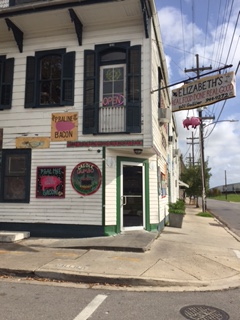
Thanksgiving in New Orleans, with my daughter who lives here and with my son who met us there, was our first trip together, and Ralph’s first time away from the farm, in probably two years.

The last trip was to New York City for a wedding. He had no interest in making that experience into an actual vacation. He attended the official events, but otherwise I could not interest him in leaving the hotel even for a short walk around the neighborhood. All he wanted to do was nap. At the time I didn’t understand how much he needed those naps so I spent the two and half days in a general state of mild annoyance.

So, while I was thrilled at spending four days with my kids in a way we seldom do, and in a way we may not get to again, I approached this week with trepidation. As did Ralph. For the last month, each time he tried to remember the plan, I tried not worry if this much travel demanded more than he was capable of handling. Four days away from his familiar routine is a lot to ask.

On our trip to NY, the greatest stress for Ralph had been the actual travel—not only the time in the air but the airport with its crowds, its lines to maneuver and all the possibilities it offered Ralph to get confused or, worse, lost—our drive to Nola was actually pretty easy. For the six hours plus, I drove while he smoked and asked me questions over and over. We listened to the radio. It was actually kind of relaxing for both of us.

And he loved our small funky hotel in a converted mansion with its side garden where he could smoke….you might notice that smoking and Ralph’s ability to smoke has become a theme not only on this trip but in our life together.

These days I accept Ralph’s need for sleep and on this trip I made sure there was plenty of naptime. If anything, I let him sleep more than I do at home.

He needed to be as rested as possible because he was expected to take part in all activities with the kids. We ate great meals, we went for beignets, we walked along the river and down Magazine Street. We waited in line at Preservation Jazz Hall, where Ralph loved the music even though he had to stand the whole time. He loved laughing over jambalaya and drinks afterwards even more, loved walking through Jackson Square singing “The Battle of New Orleans” with my son-in-law as they vied to see who knew more of the words (a tie).

We spent Thanksgiving Day preparing a big meal at my daughter’s apartment listening to music, teasing, laughing, having the usual family spats and just hanging out together. Telling family stories Ralph was in his element, more the Ralph of years past than he has been in ages.

The description above is how I want to remember the week. But a shadow of tension followed me everywhere. “What’s the agenda?” he would ask and then ask again—questions I am used to answering over and over but my kids are not. At meals, I would suddenly realize that Ralph either wasn’t paying attention or had given up trying to follow the conversation the rest of us were having. Every time he needed to use the restroom in a restaurant I went on alert to make sure he could find his way there and back. He couldn’t follow the TV shows we sat around watching. Every few minutes he wondered aloud, “I wonder what the dogs are doing.” He went outside to smoke and went outside to smoke and went outside to smoke.

The good times, and they were good times, were a lot of emotional work for both us. I realized how much I have not only arranged my life around Ralph’s but how Ralph’s cognitive issues have played into my own tendencies toward over-planning and over-worrying, not only about him but about most areas of my life. What is most worrying is that I see how my own boundaries have narrowed, that I have to work doubly hard to keep myself engaged with the world beyond the parameters of Ralph’s MCI/Alzheimer’s.

Ten minutes ago Ralph climbed into the backseat of my car, headed back to the farm with my daughter and her husband who will fly off tomorrow on a vacation abroad (another anxiety producer given recent world events). I have stayed here in New Orleans to babysit my granddaughter for a week.

I know Ralph will be fine. He has been alone before, my son is going to stay on the farm with him a good part of the time, and various friends will be checking in regularly. His drugs are all marked, his calendar is filled in, there’s a week’s worth of meals ready, and I’m a phone call away.

But I am also a nervous wreck. Of course, maybe that has less to do with Ralph and more to do with taking charge of an 11-year-old girl who is a lot less easy to boss around than Ralph.

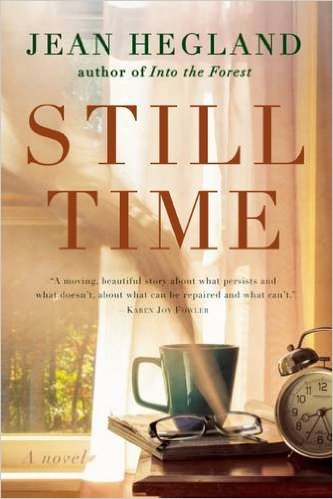
Still Time:                                       A Novel About Shakespeare, Memory and So Much More

51TIY3hzhlL._SX331_BO1,204,203,200_

What a lovely surprise I found reading Still Time—an elegant, sharply intelligent but emotionally intuitive novel that happens to have as its protagonist a retired Shakespearean scholar spiraling into Alzheimer’s.

Shakespeare? Alzheimer’s? I admit I opened the book with dread. I am not a fan of issues-centered novels, including issues that affect me, in other words including Alzheimer’s. I dislike books that glamorize victims. I cringe at them when they’re pathetic and when they’re noble, perky, and uplifting. I avoid educational books; even the Alzheimer’s bible The 36-Hour Day left me cold. And I hate preachy books period, whether fiction or non-fiction, whether or not I agree with the basic message, political, spiritual, or nutritional for that matter.

And while I have more than a passing knowledge of Shakespeare, I can’t say that a novel promising to delve into literary criticism of his plays would exactly whet my reading appetite.

But Hegland held my interest in the Bard all the way through—well, there was a bit of skimming in some of the longer winded bits on Shakespeare.

As for the Alzheimer’s bit, Hegland is the first author I’ve read who makes Alzheimer’s both a central element in the novel and a metaphor for larger questions the novel raises about the human condition.

As the novel opens John Wilson is moving into a nursing facility . His beloved fourth wife Sally, who supports him, feels she has no choice. She cannot manage her work as a bee keeper and care for him any longer at home.

While Hegland takes us inside John’s interior world, particularly his rumination and meditations on language, time, and memory in relationship to his enduring passion for Shakespeare—he memorized his first play, Romeo and Juliet when he was 19—she does not pretend to explain Alzheimer’s. We see the shrinkage of his world, the graying and narrowing, but John is a very particular combination of mind and heart, not a generic representative. Not too many folks with Alzheimer’s express themselves most clearly in Shakespearian verse. Not too many husbands on the eve of being institutionalized joke lovingly to their beekeeping wife, “Beauty is in the eye of the bee holder.”

At Sally’s prompting  John receives a visit from his only daughter Miranda (named for Prospero’s daughter in The Tempest). The two have been estranged for ten years, ever since Miranda, then fifteen, accompanied John and his third wife to a literary conference in London. During the trip an incident occurred that scarred father and daughter in ways neither has been unable to share; each has therefore continued to misinterpret the other’s reaction.

So narratives lines from the present and the past twist together. John lives more and more deeply inside his mind, which remains alive to the language and the emotional resonance of Shakespeare’s plays even as he loses track of the concrete world around him. Meanwhile he and Miranda follow the confusing maze of their relationship to its center.

Miranda is not an academic scholar like John, but like him she is a lover for stories. And her talent and passion for video game art offer a provocative consideration of the creative experience and the evolution of creative forms.

At one point Miranda asks John which play is his favorite. Love’s Labors Won, he tells her and of course she thinks he means Love’s Labor’s Lost, but he explains, quite lucidly that Love’s Labor’s Won was actually registered but no copies have been found. Miranda understandably asks it the lost book is his favorite, “Because love won?”

“ ‘Because,’ he says impatiently, ‘it could be anything. It’s what we don’t…have, what we can only imagine. The possibilities.’ ”

Explore the possibilities of Still Time for yourself. I’d love to hear if you found it as profound as much as I did.